



Do It Yourself
Looking To Do It Yourself?
Sometimes you just want to do something yourself. Whether you want to save money or you’re just bored on a Saturday, we’ve got your back. We’ll post information for our DIY minded customers here. We’ll try to add new projects throughout the year, so be sure to check back. If you see something you’re interested in, but don’t want to do it yourself, just give us a call.
Dry Wells
Dry wells won’t work for all drainage situations. They provide constant passive drainage. They do not quickly move large volumes of water.
Optimal uses for wells:
- Draining AC condensation lines.
- Draining constantly saturated areas.
- Draining struggling trees and shrubs.
- Suboptimal uses for wells:
- Draining pools.
- Draining downspouts or gutters. They will accomplish this task, but are slow.
- Draining water contaminated with chemicals such as motor oil or gasoline. You don’t want to dump chemicals directly into the water table.
Tools & Materials:
- Seymour 6″ Soil Auger
- Threaded black iron pipe. 3/4 inch diameter, 5 foot long. You’ll need 4 – 5 of these.
- 3/4 inch threaded black iron coupling. One for each pipe, so 4 – 5.
- Bagged rock. I suggest either pea gravel or drainage rock but really any small stones will work. The smaller the better. You’ll need 8 – 10 bags for an average 20 foot deep well.
- Pipe wrench or large channel locks for removal and installation of pipes / couplings on the auger.
- Shovel to start the well. I prefer a square shovel like a spade (not a loading shovel), but any digging shovel will work.
- Wheelbarrow for soil.
- Optional: Renting a 1 man gas auger with a 4 foot auger bit and an extension will speed up the process. Home Depot offers them by the half or full day.
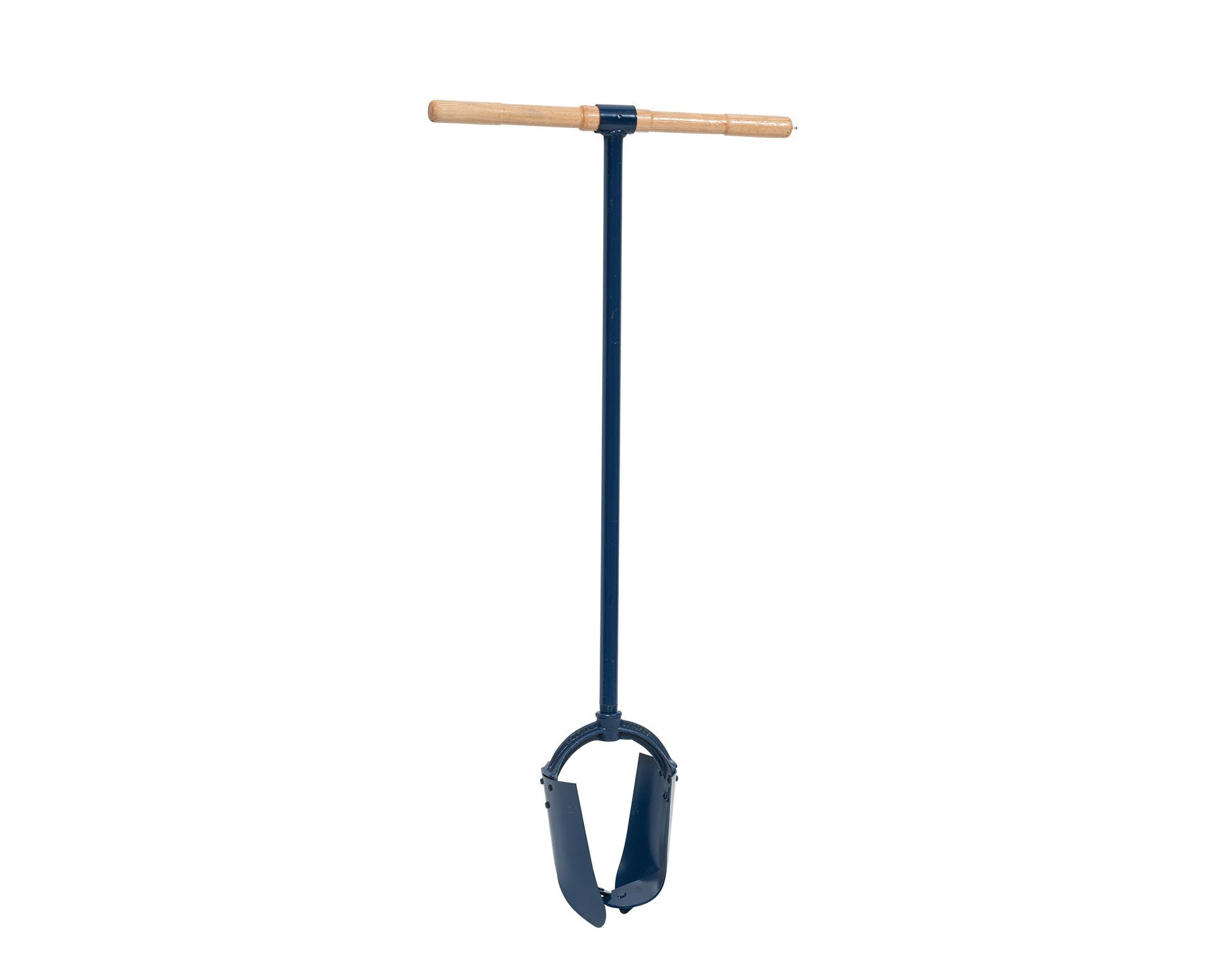
Seymour auger
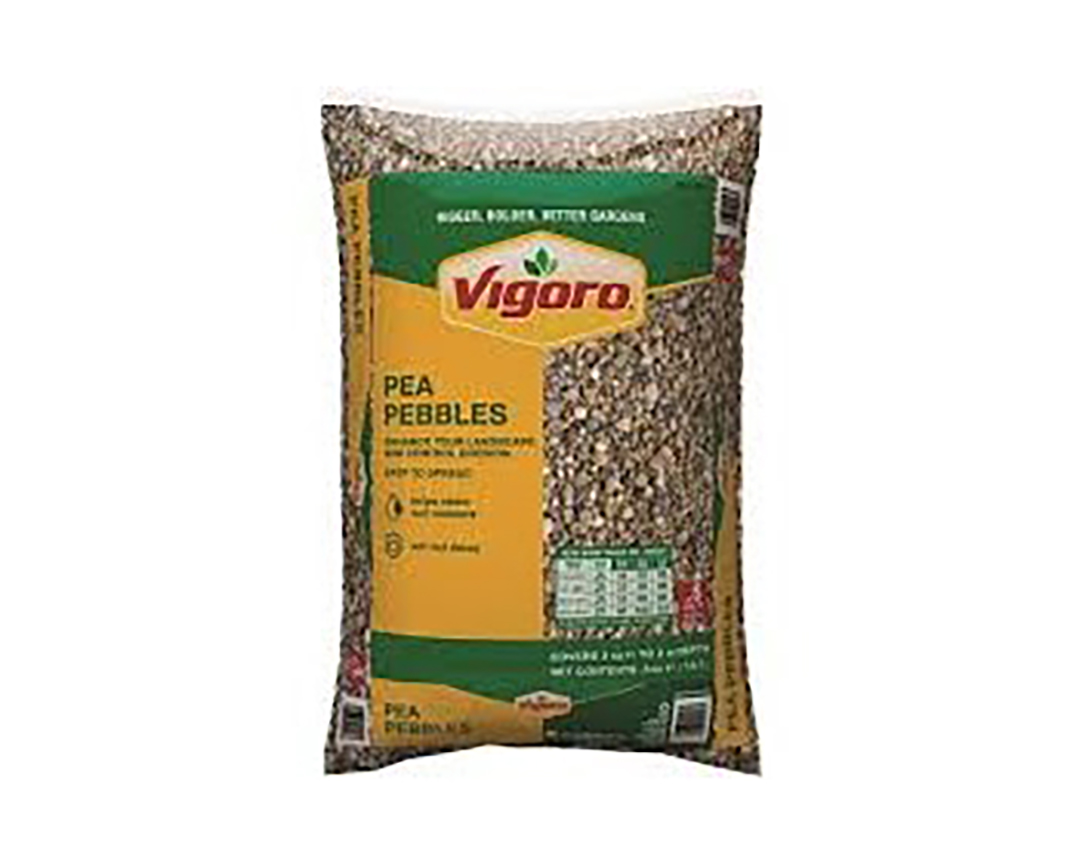
Pea gravel
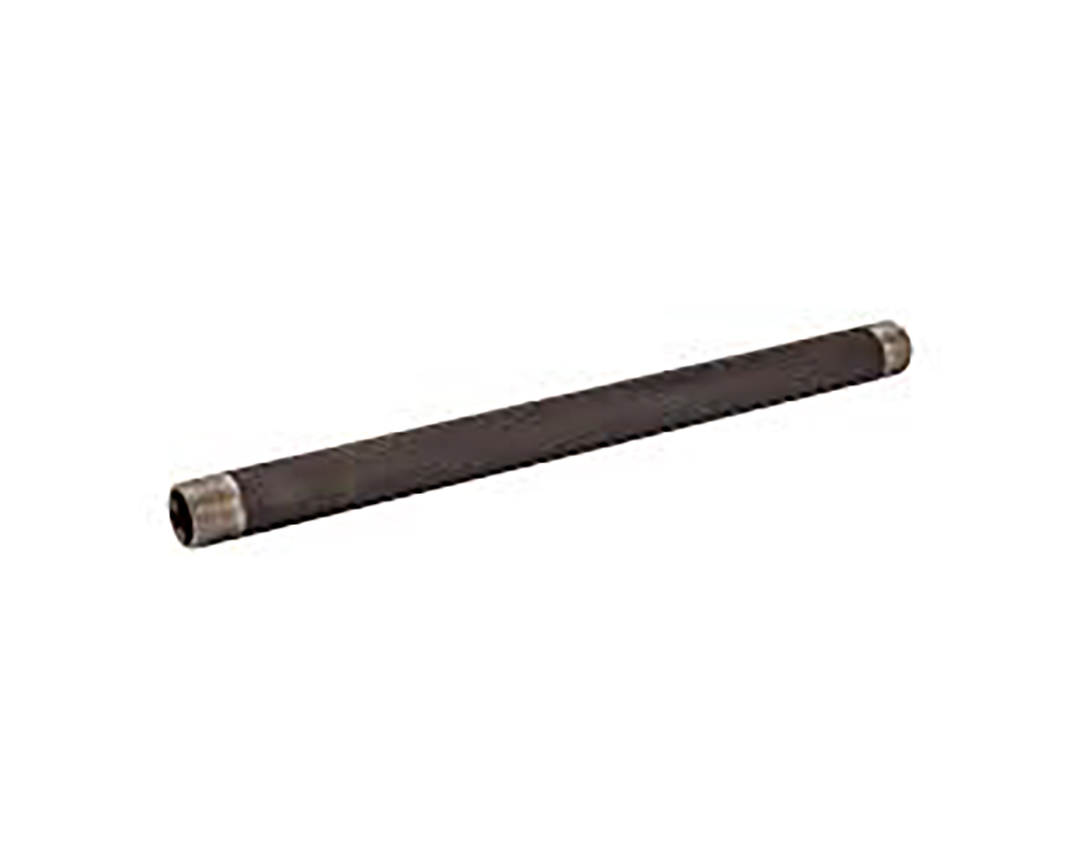
Iron pipe
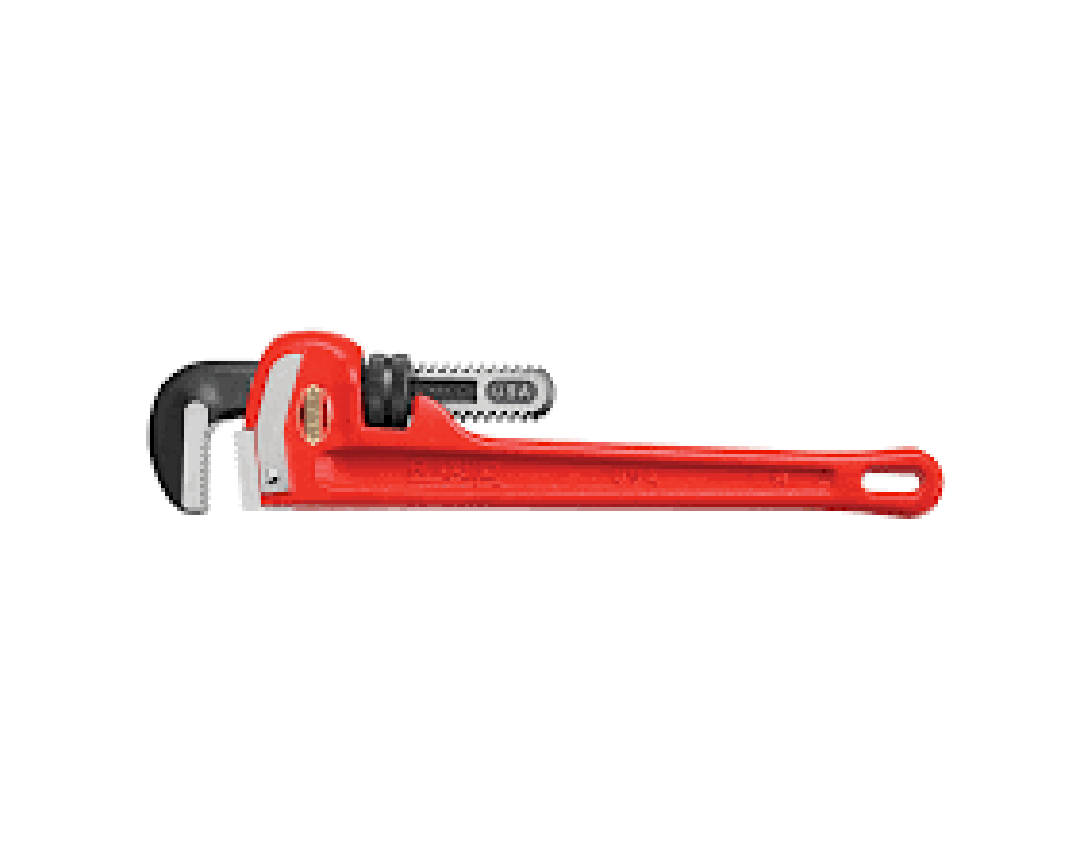
Pipe wrench
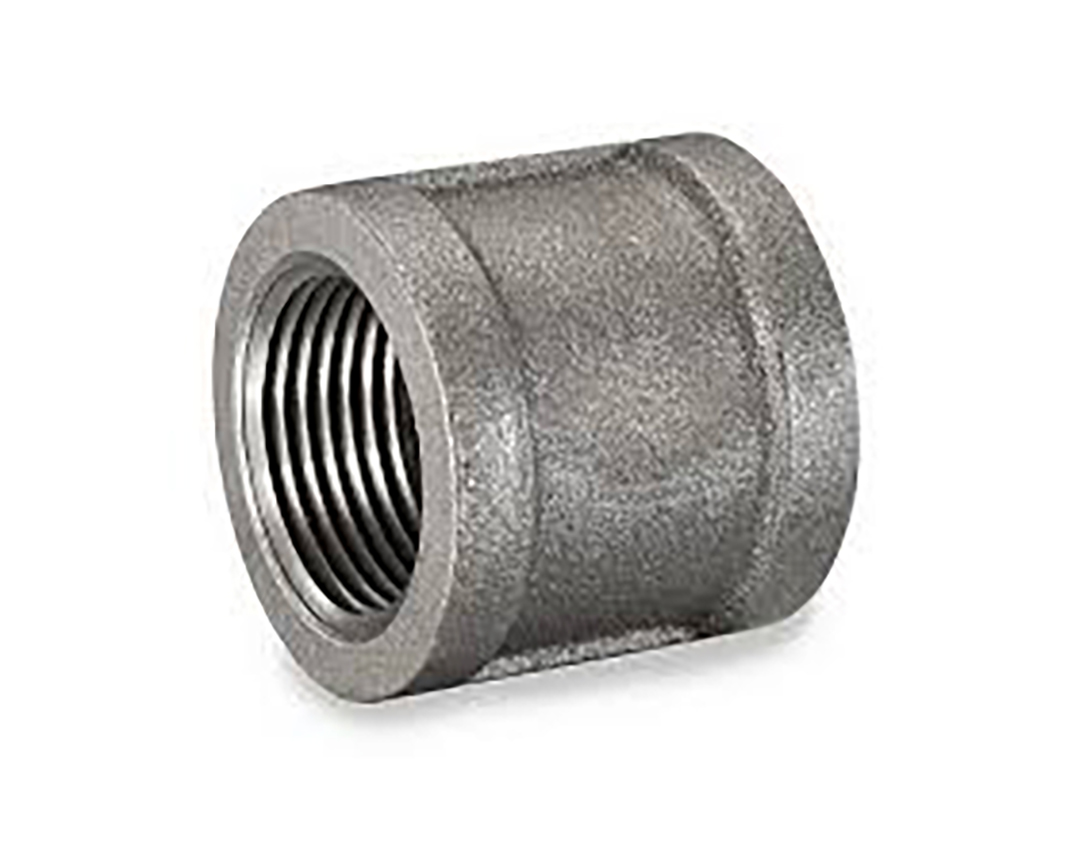
Threaded coupling
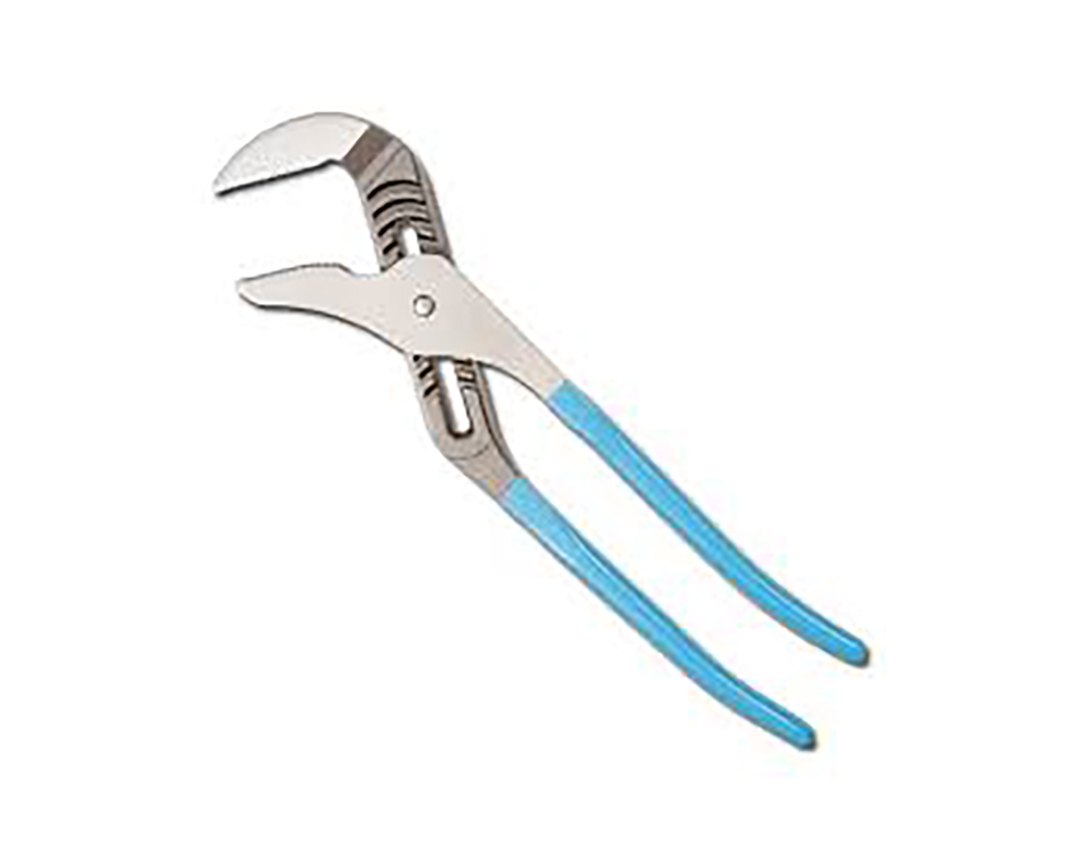
ChannelLock
Installation Steps:
- Call Miss Utility at 811. Have underground utilities marked. Wait until you get a positive response email before starting work.
- Identify the location(s) for your well(s). Each well will drain 6 – 8 feet in diameter around the well. Try to locate them in low spots so that water naturally flows to the well.
- Start the well by digging as deep as possible with your shovel. This will allow you to identify any shallow unmarked lines (private utilities, irrigation etc…) and roots. It will also give you a good “pilot hole.”
- Put the auger in your hole, and turn it, filling the auger with soil.
- Empty the auger into the wheelbarrow.
- Repeat steps 4 – 5 until the handles of the auger are on the ground. Resist the temptation to stop before the handles touch the ground. Adding a new pipe too soon will make drilling harder.
- Using a pipe wrench or channel locks remove the auger head from the auger. If doing this with a helper, have them stanbd on the handles and use a single wrench. If you’re doing it by your self, use two wrenches.
- Thread a coupling onto the auger handle.
- Thread a pipe extension onto your coupling.
- Thread the auger head onto the pipe extension.
- Lower the auger into the hole. Don’t just drop it as this can bend the auger head.
- Repeat steps 4 – 11 until you reach water, installing one pipe extension at a time. Avoid stopping before you reach water or the well may be ineffective. You’ll begin to hear water when you lower the auger in the ground. Keep going, if possible. At some point the soil will be wet enough that the sides of the well collapse as soon as you remove the auger and soil will fall out of the auger head. This is your stopping point. In Hampton Roads, this is typically 15 – 25 feet deep.
- Fill the hole with gravel, to a height slightly higher than the surrounding turf to allow for some settling. More settling may occur over the next few weeks. Refresh the rock as needed.
- If you’re installing a drainage grate, do so after settling as stopped. I prefer to leave the well without a grate, unless draining an ac condensation line.
WARNING: Be cautious as you start to get to moist soil and / or water. The suction can make it difficult to remove the auger. If the auger starts to “hydro lock”, fill the auger less full before dumping and lift the auger out with a twisting motion.
You may hit impassable obstacles such as large roots or construction debris. If you, fill the hole in and move over a few feet to start again. Having the gas auger is handy here because restarting a hole is much faster.
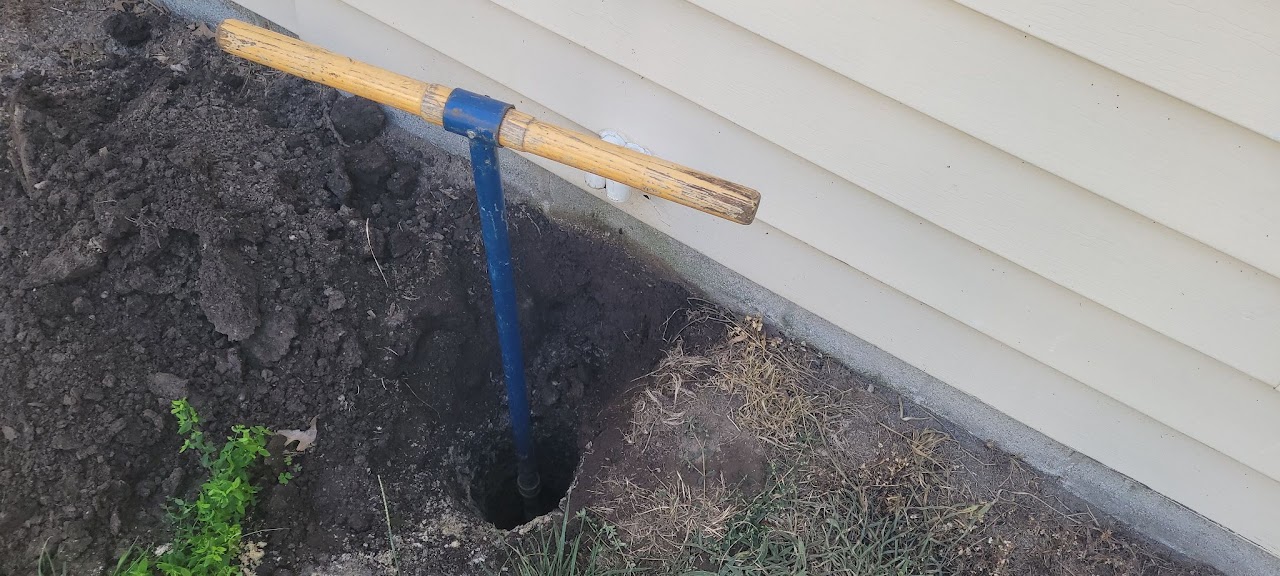
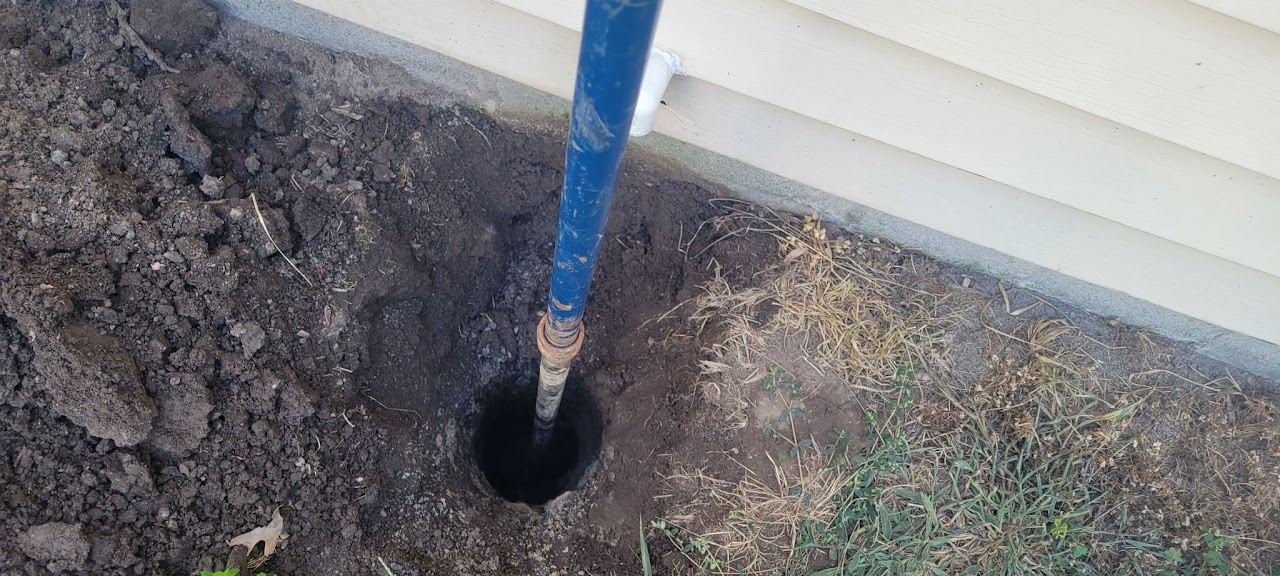
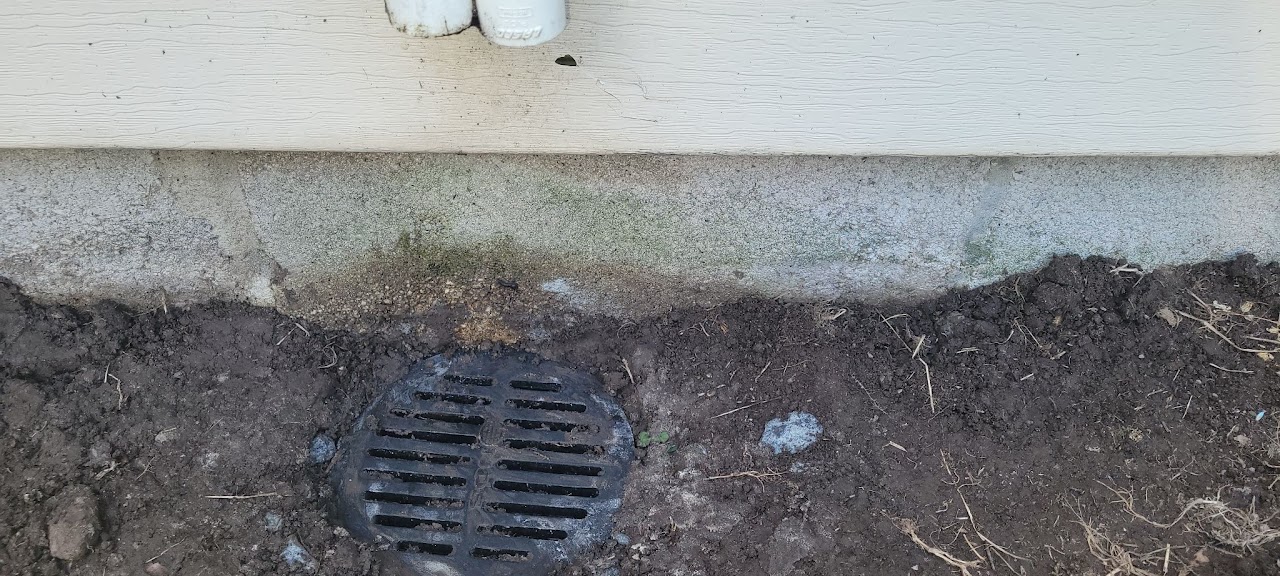
If I use a grate, I usually drill a small hole on tow sides of the grate and pound a sod staple into each hole to help retention.
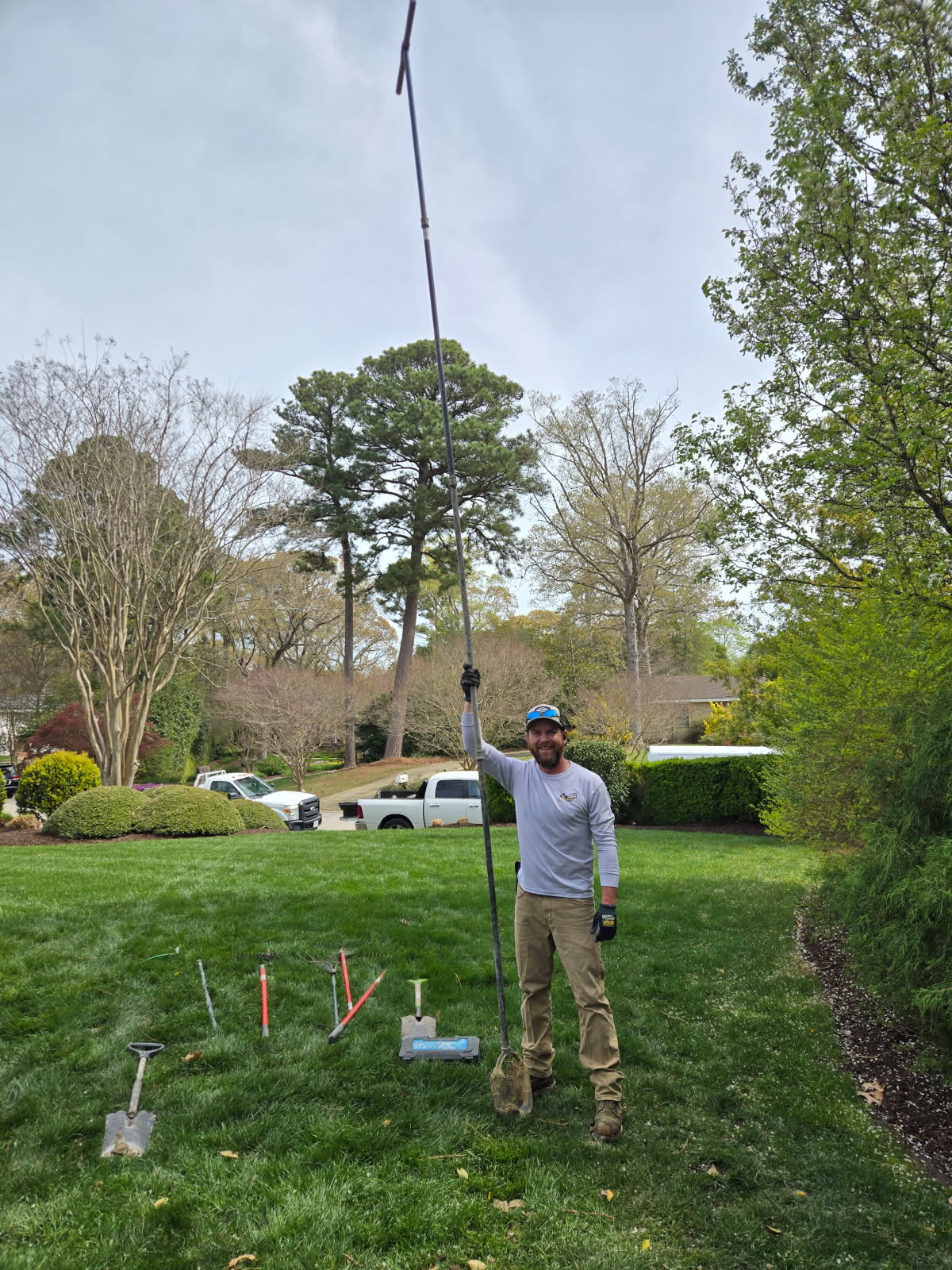
The auger will get quite long during the process. Be sure not to drop it forcefully into the hole or you may damage it.
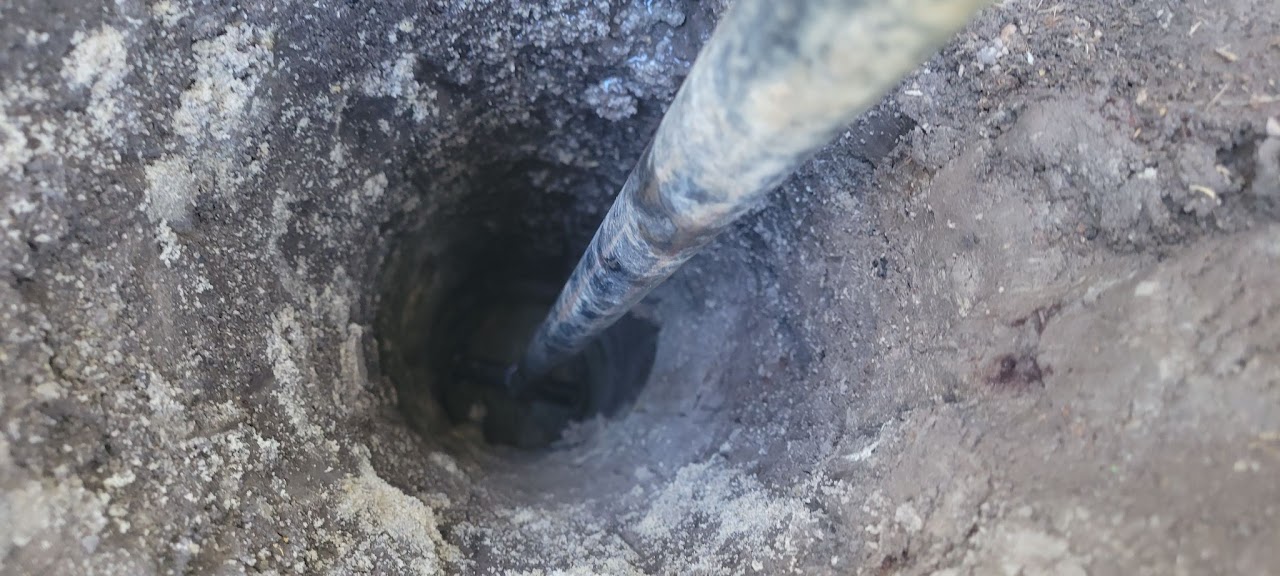
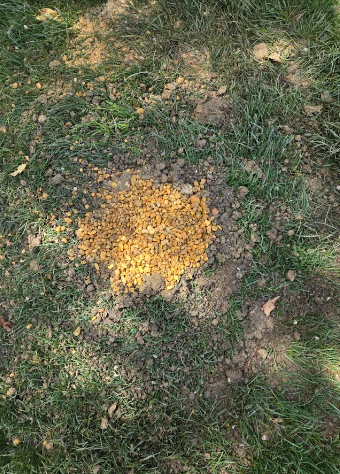
Wells may be left “natural” allowing grass to grow over them or topped with a 6 inch drainage grate.
Fungicide & Damaging Insect Treatment
Fescue & St. Augustine lawns are both very vulnerable to summertime fungal diseases. Managing disease is an important part of maintaining these lawns.
Dreamlawns offers a 5-application program that protects against both fungal diseases turf damaging insects (such as grubs and fall armyworms), and has a light nutrient package to help your lawn recover from and resist disease. We recommend this plan to all Fescue & St. Augustine customers.
There are also great D.I.Y. options. The plan below will provide protection against both issues, if the directions are carefully followed.
Round 1: Turf Damaging Insect Control
Timing: Middle to end of April.
Product: Acelepryn G
Rate: 2 lbs. per 1,000 sq-ft of turf.
Information: This application will protect your lawn from early-season insect damage by killing most insects that feed on your turf. It will NOT control insects that don’t feed on turf, such as mosquitoes, fleas, and ticks. Apply the product evenly across the entire lawn. Water in the application, if possible.
Round 2: Fungal Disease Control
Timing: 2nd week of May.
Product: Headway G
Rate: 4 lbs. per 1,000 sq-ft of turf.
Information: This application will protect your lawn from fungal diseases such as brown patch, grey leaf spot or dollar spot. The protection will last for 3 – 4 weeks under ideal conditions; if conditions are less than ideal (usually because of too frequent rainfall or irrigation), protection may be reduced. This guide has watering recommendations for each common turf in our area, be sure to take a moment to review the page for your turf.
Round 3: Fungal Disease Control
Timing: 2nd week of June.
Product: Eagle Fungicide
Rate: 4 lbs. per 1,000 sq-ft of turf.
Information: This application will protect your lawn from fungal diseases such as brown patch, grey leaf spot or dollar spot. The protection will last up to 2 weeks under ideal conditions; if conditions are less than ideal (usually because of too frequent rainfall or irrigation), protection may be reduced. This guide has watering recommendations for each common turf in our area, be sure to take a moment to review the page for your turf.
Round 4: Fungal Disease Control
Timing: 1st week of July.
Product: Headway G
Rate: 4 lbs. per 1,000 sq-ft of turf.
Information: This application will protect your lawn from fungal diseases such as brown patch, grey leaf spot or dollar spot. The protection will last for 3 – 4 weeks under ideal conditions; if conditions are less than ideal (usually because of too frequent rainfall or irrigation), protection may be reduced. This guide has watering recommendations for each common turf in our area, be sure to take a moment to review the page for your turf.
Round 5: Fungal Disease Control & Turf Damaging Insect Control
Timing: 1st week of August.
Product: Headway G & Acelepryn G
Rate: 4 lbs. per 1,000 sq-ft of turf (Headway G) & 2 lbs. per 1,000 sq-ft of turf (Acelepryn G).
Information: This application will protect your lawn from both fungal diseases & damaging insects.
The protection against insects is particularly important as fall armyworm season is fast approaching. Acelepryn must be applied and activated (watered in) several weeks before armyworms become active. If you suspect that you have active armyworms please call us ASAP as armyworm damage happens VERY fast. This product will not stop an active armyworm infestation as it must be activated and well absorbed by the turf before an outbreak begins.
As with other fungicide applications, the length of protection against disease will depend on watering or rainfall frequency. Please continue to carefully follow our watering recommendations.
Notes:
- You can omit the Acelepryn G applications if you are not interested in insect control, but keep in mind that doing so will leave your lawn vulnerable to insect damage.
- Acelepryn G WILL NOT control non-turf damaging insects, including fleas, ticks, mosquitoes, ants, waterbugs (American cockroaches) or German cockroaches.
- Acelepryn G will reduce white grubs, but reducing white grubs WILL NOT reduce mole populations. Please do not apply Acelepryn G as a method of reducing moles.
- Please carefully read and follow all label directions. Using any pesticide in a manner inconsistent with its label is a violation of federal & state law. Acelepryn G Label Headway G Label Eagle Fungicide Label
- Please closely follow our watering recommendations for your turf type. Fungicide applications will not allow you to overwater your lawn.
- The application program outlined above is similar, but not identical to Dreamlawns’ Turf Damaging Insect & Disease Control Program.
- Dreamlawns makes no warranty or guarantee as to the effectiveness of any self applied program.
- Please call us if you see signs of disease or insect damage on your lawn.
Plugging
Plugging is the process of planting small pieces (plugs) of grass and is an economical way to establish expanding grasses such as Bermuda, Zoysia, and St. Augustine. These grasses are difficult or impossible to establish from seed, and sod can be rather expensive. Plugging is a great DIY option for homeowners seeking to establish one of these grasses without the expense of sod. It takes 1 – 2 years to establish Bermuda or St. Augustine and 2 – 3 years to establish Zoysia by plugs.
Tools & Materials
- Auger Bit
- Cordless Drill
- Bermuda, Zoysia or St. Augustine plugs
- Earthworks 3-3-3 Myco-Replenish Compost Fertilizer
- Measuring Wheel, or Tape Measure
- Marking Paint & Marking Wand – OR – Marking Flags
- Water Timer & Sprinkler(s)
Installation steps:
Steps 1 & 2
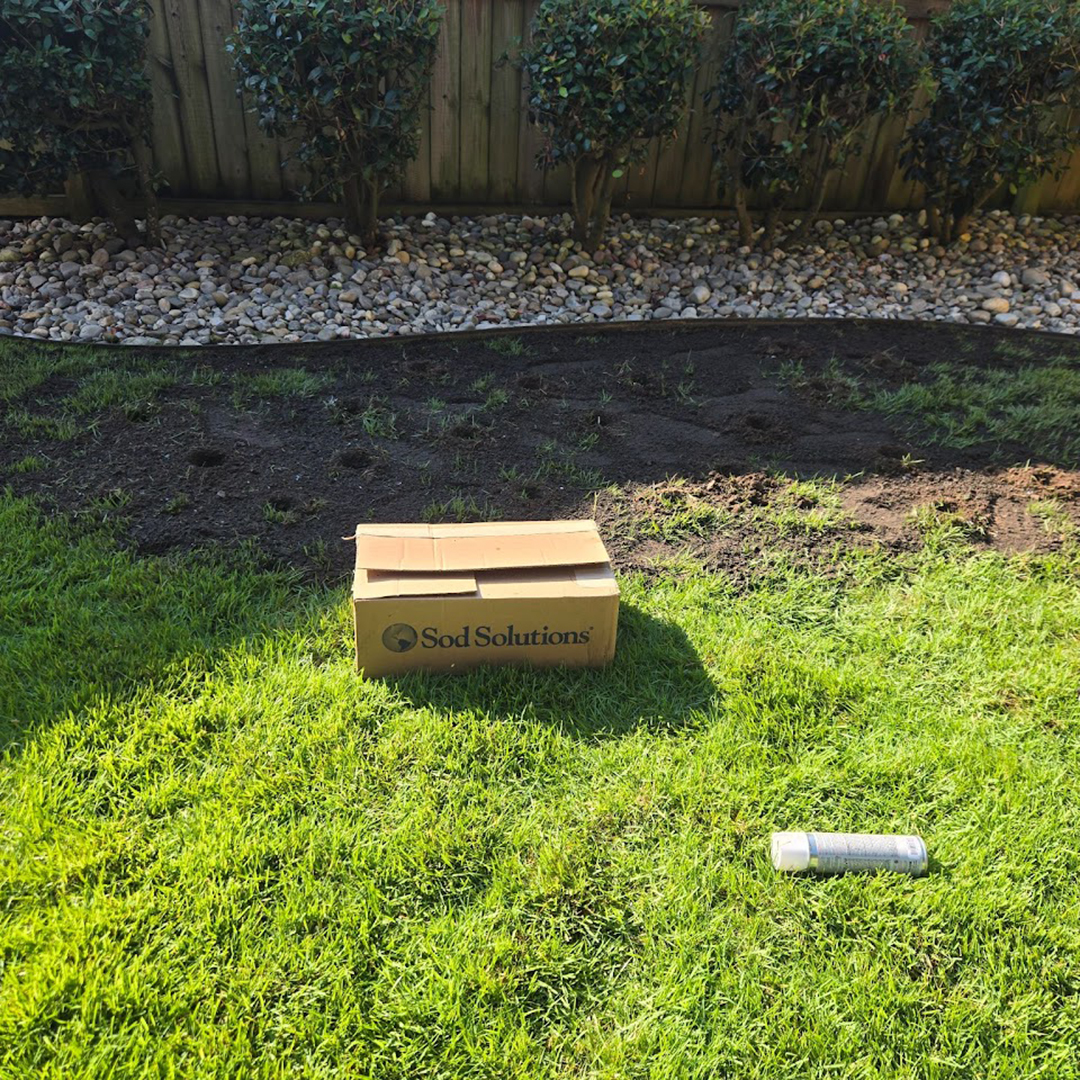
Measure the planting area. Before you can order plugs, you’ll need to measure the area to determine how many plugs that you’ll need. You can use a tape measure for small areas, but large areas are more easily measured with a wheel or an online measuring tool such as Findlotsize.
Order your plugs. Plugs are planted in a grid pattern with 8 – 18 inches between each plug. We usually plant them about 12 inches apart, so 100 plugs would cover about 100 sq-ft.
Step 3
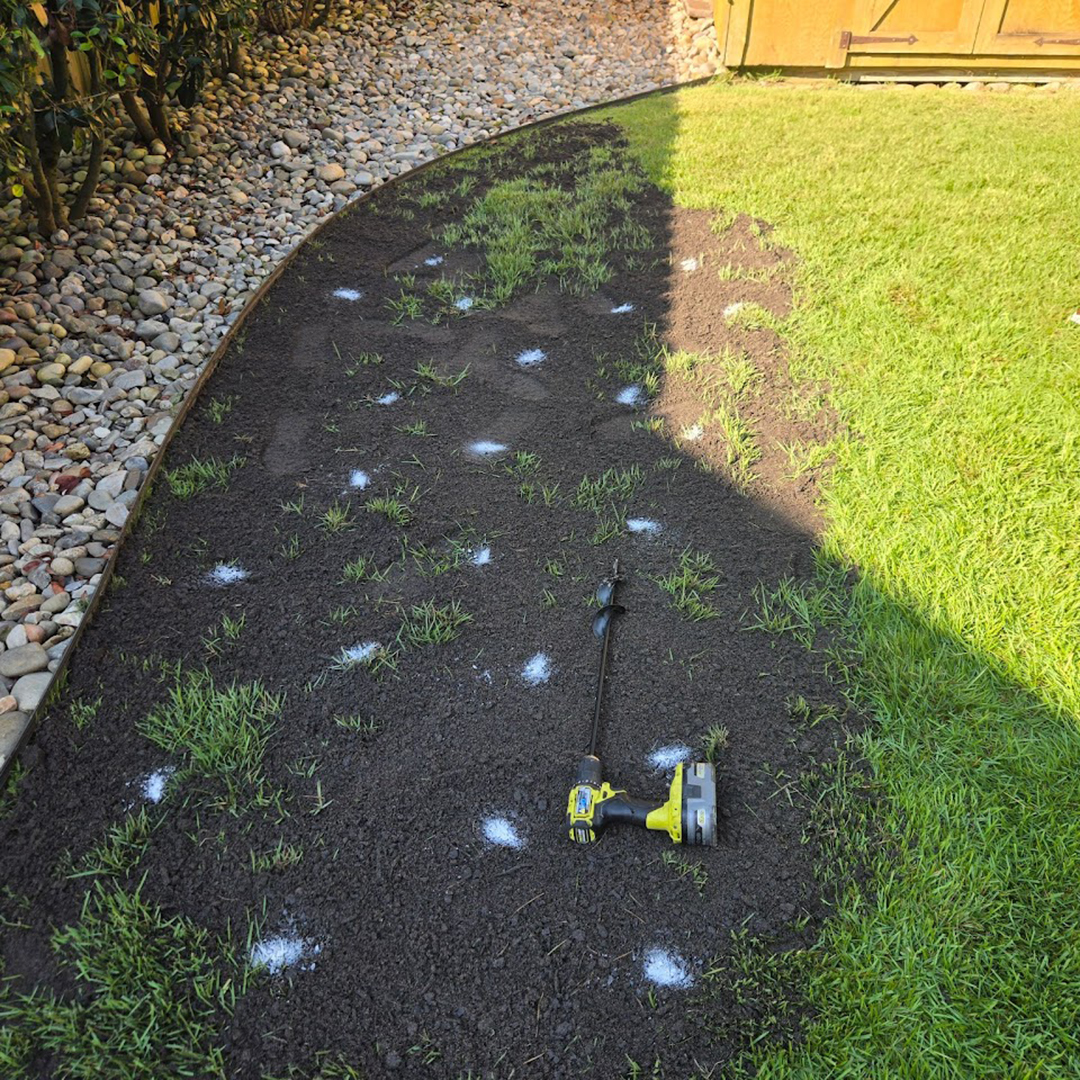
Mark off your installation grid using marking paint or flags.
Step 4
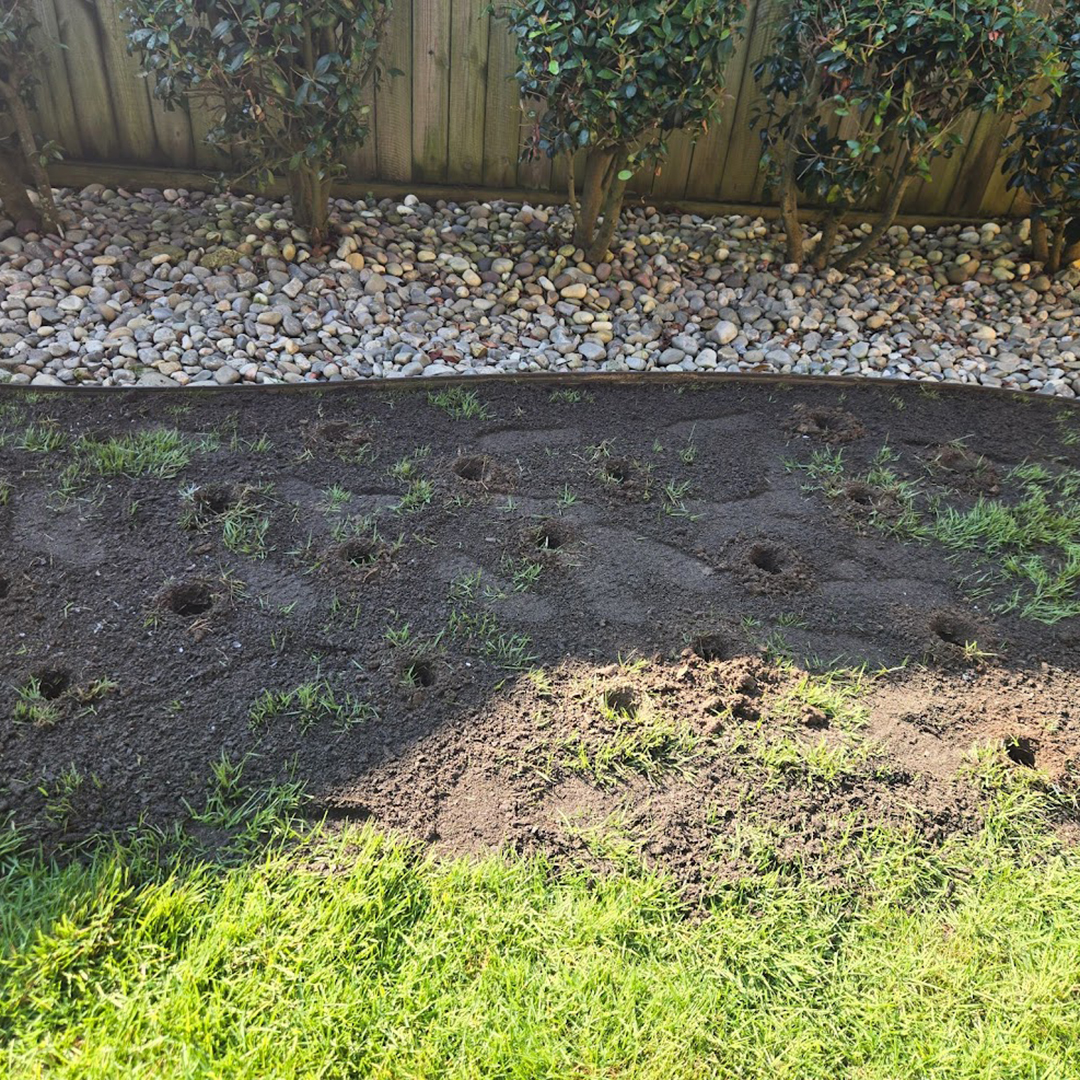
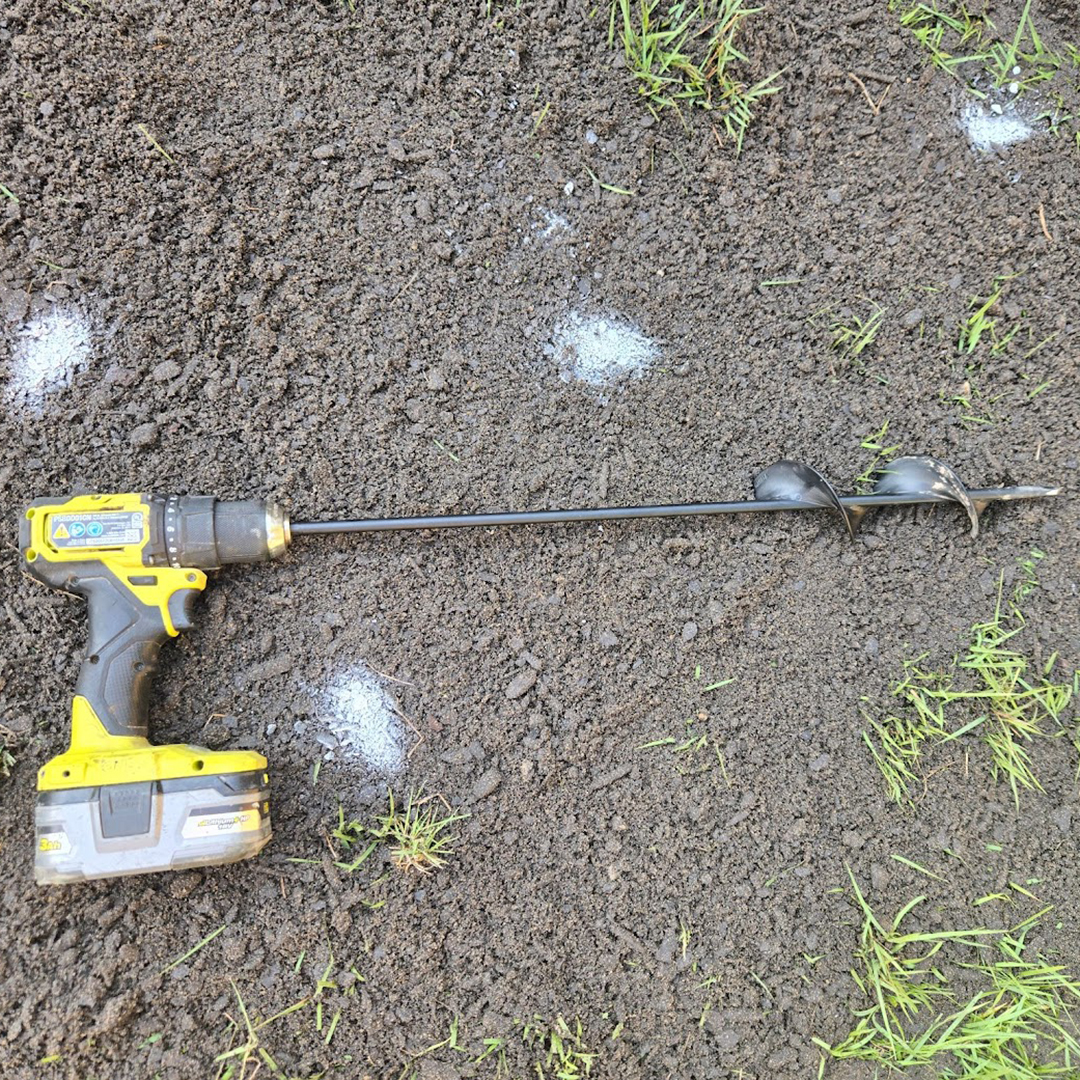
Using the auger & a cordless drill, drill holes to a depth of about 1 1/2 inches.
Step 5
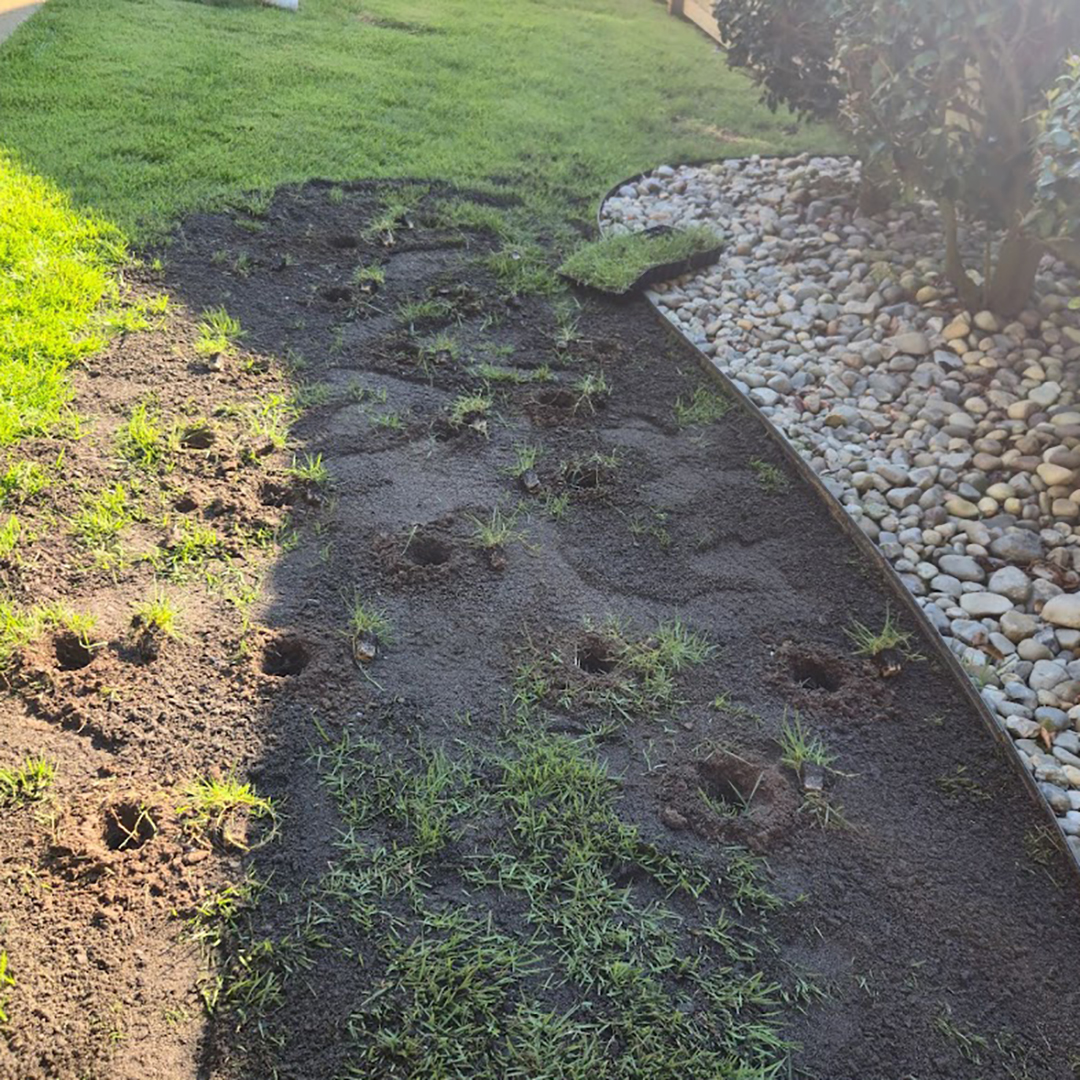
Lay the plugs out next to (or inside) each hole.
Step 6
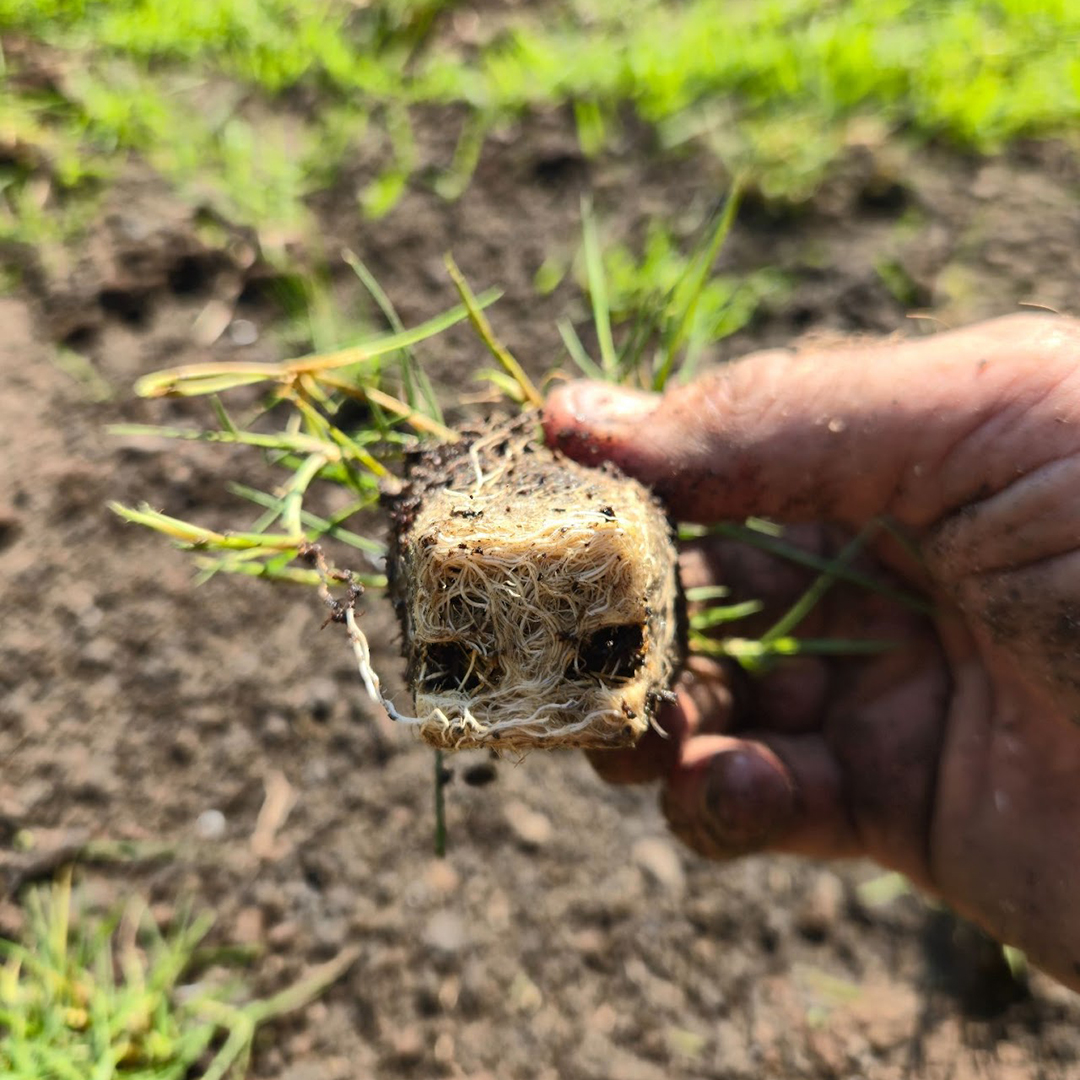
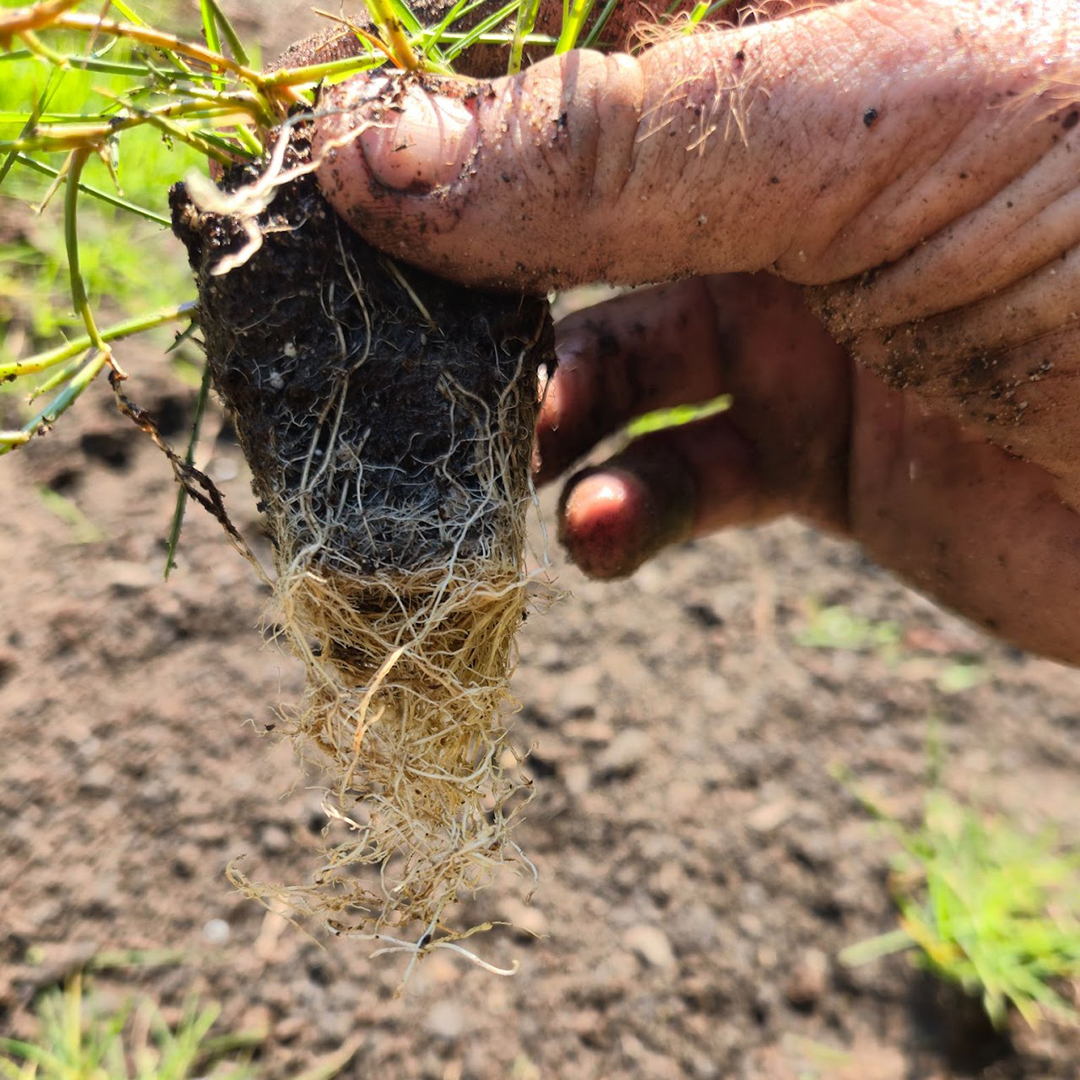
Plugs may be rootbound. If so, gently loosen the roots until some of them are hanging.
Step 7
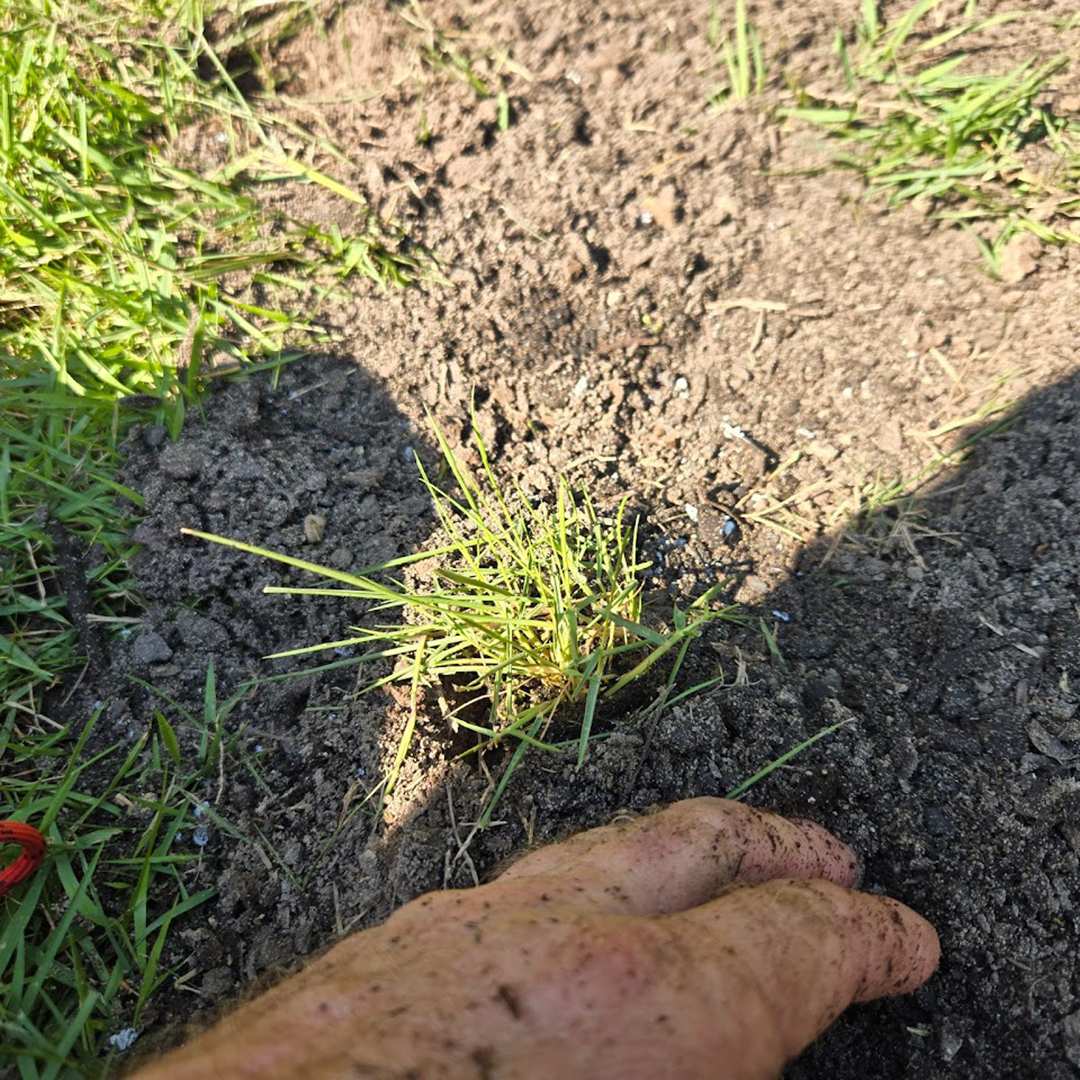
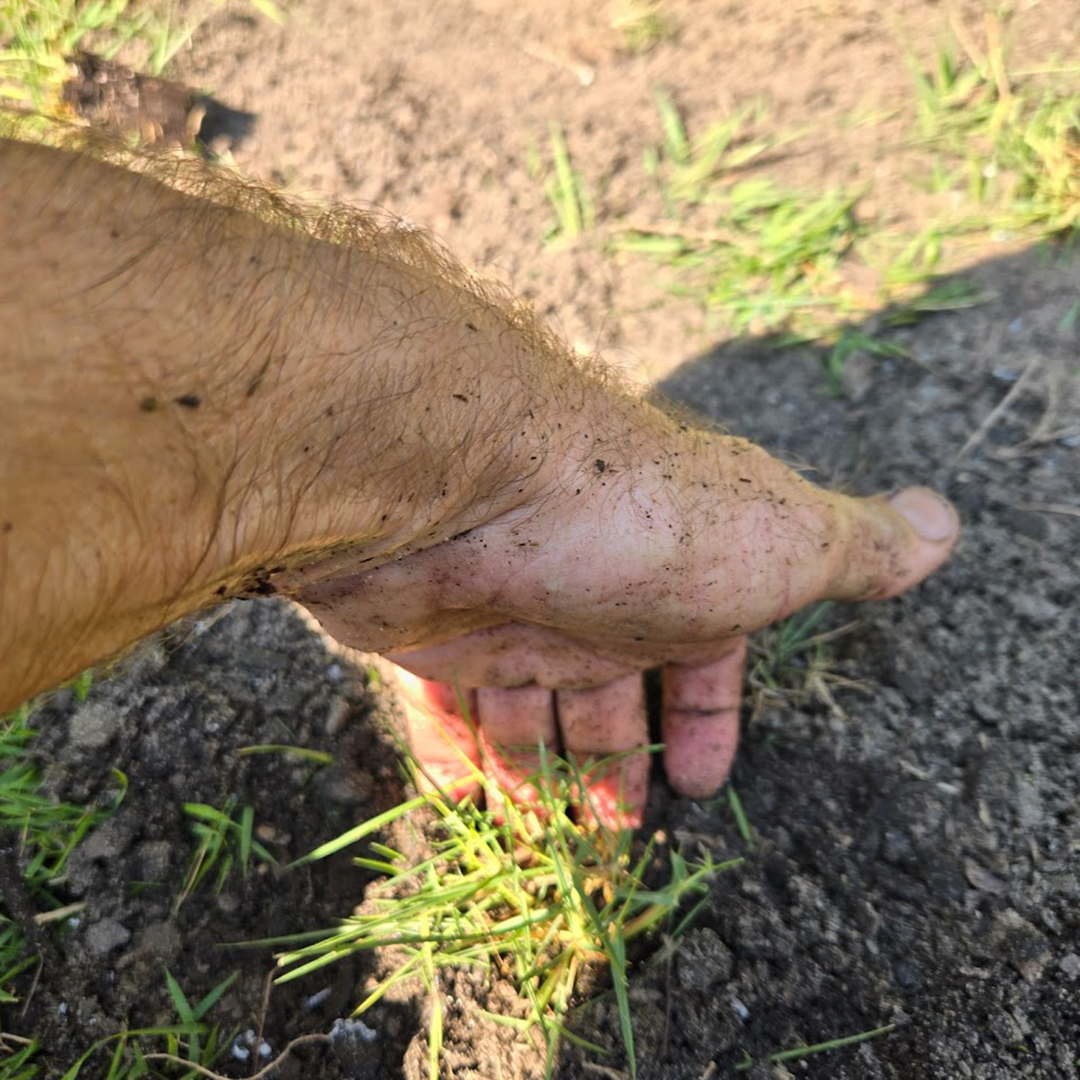
Insert each plug into its hole. Push the soil down around it to fill in the hole. Be sure that the crown of the plant (where the grass meets the soil) is level with or slightly above the edge of the hole.
Step 8
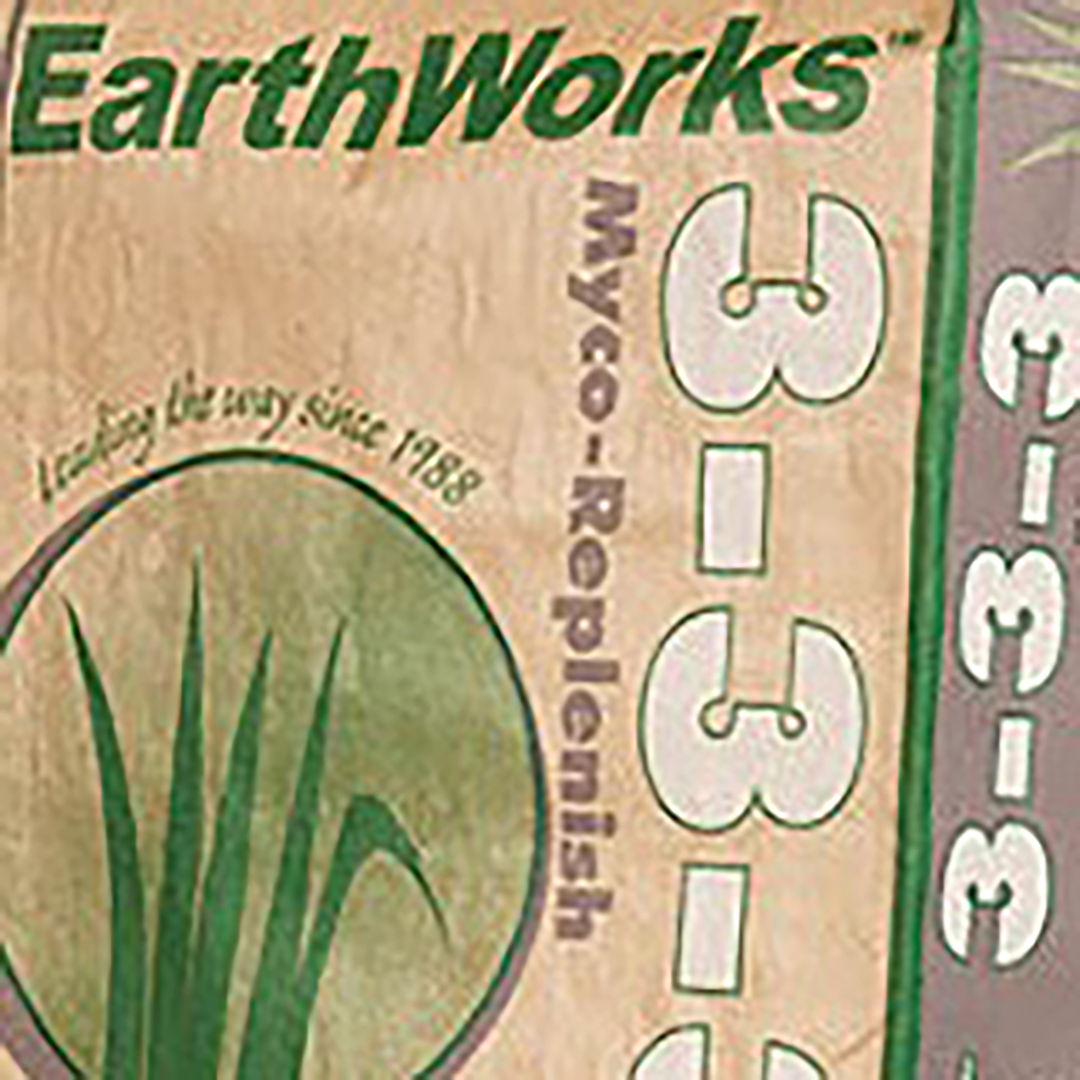
Apply Earthworks 3-3-3 to the area at a rate of 15 lbs. per 1,000 feet of turf.
Step 9
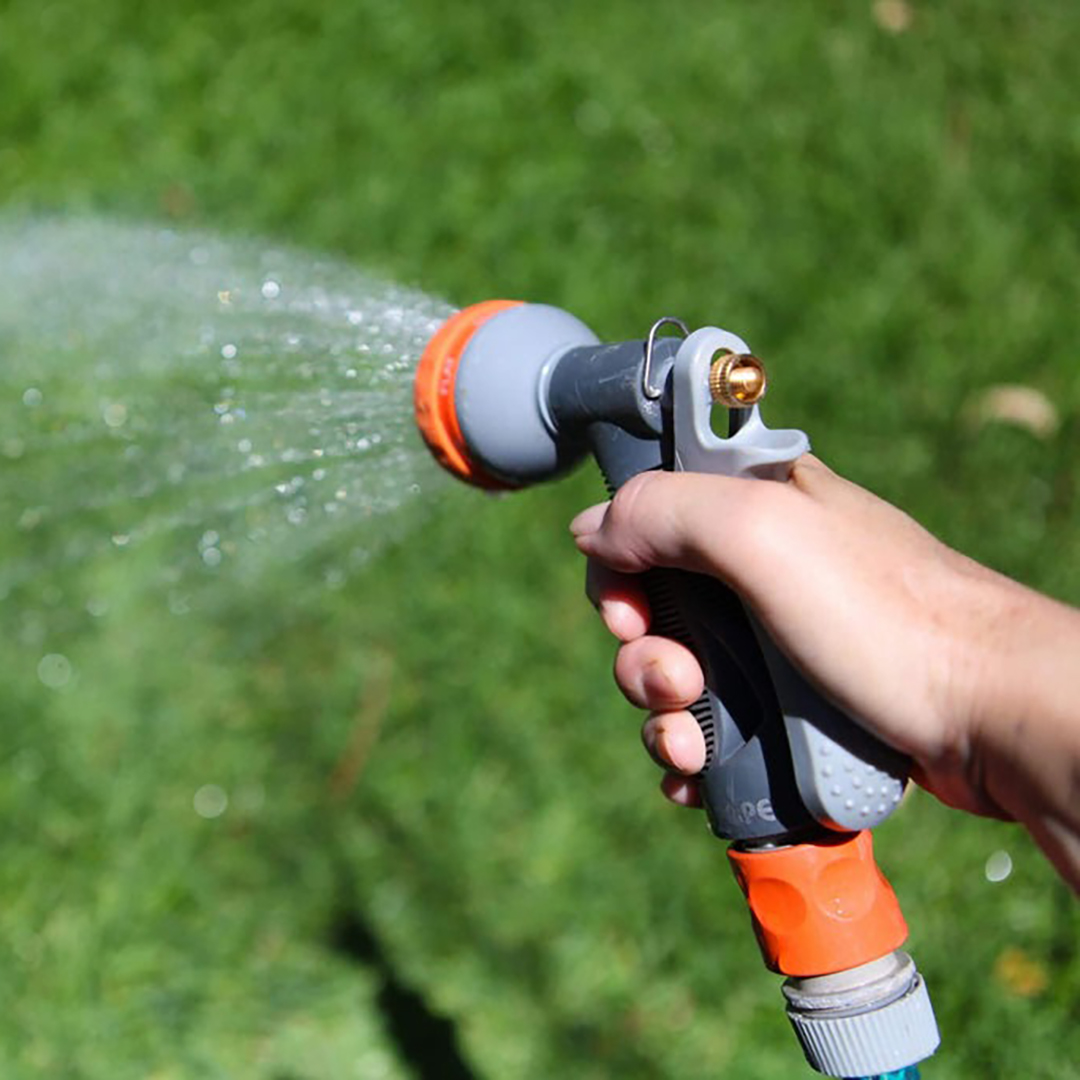
Water the new plugs immediately. The goal is to wet the soil to a depth of about 6 inches.
Caring for your plugs
Watering:
The initial goal is to keep the soil wet to a depth of 6 inches, but not waterlogged. As the plugs root, we’ll water less frequently but more heavily.
Water your grass plugs 10 – 15 minutes twice a day for 14 days.
On day 15, change to watering once a day for 15 minutes. Maintain that for 7 days.
On day 22 test for rooting by gently pulling on a plug; it should show new runners and resist being uprooted. If the plugs are rooted, reduce watering to twice a week and increase time to 30 – 45 minutes. Maintain that watering schedule until the end of summer.
If yellowing or browning occurs at any step, go back to the last step and call us asap. Watering times are approximate and may change significantly due to sprinkler type and layout. Adjust time as needed to keep soil damp but not waterlogged.
Disease:
The plugs will be highly vulnerable to fungal disease for the first few weeks. If Dreamlawns is not treating the lawn for disease, we strongly suggest that you self treat using Headway G at a rate of 4 lbs per 1,000 sq-feet of turf. Treat as soon as the plugs are installed and repeat in 3 – 4 weeks. See the Fungicide & Damaging Insect Treatment section above this one for more information.
Mowing:
Wait until the plugs have established and grown to at least 3-4 inches in height before mowing. That will usually take about 3 – 4 weeks. Ensure your mower blades are sharp before the first mowing to avoid damaging the new grass plugs and mow at the highest setting for the first mow. After the first mowing, reduce mow height to 3 – 3 1/2 inches.
Weeds:
Weed populations will likely rise over the first few weeks. We won’t be able to treat weeds until the plugs have been mowed 3 – 4 times, so approximately 6 – 8 weeks after installation. We’ll regain control over weeds after the plugs are well established.
Please keep a close eye on the plugs. They’ll be very vulnerable for the next few weeks. Please let us know ASAP if you see any yellowing or browning.
If you’d like to plug areas of your lawn, but don’t feel up to doing it yourself, please call us today for options.

