


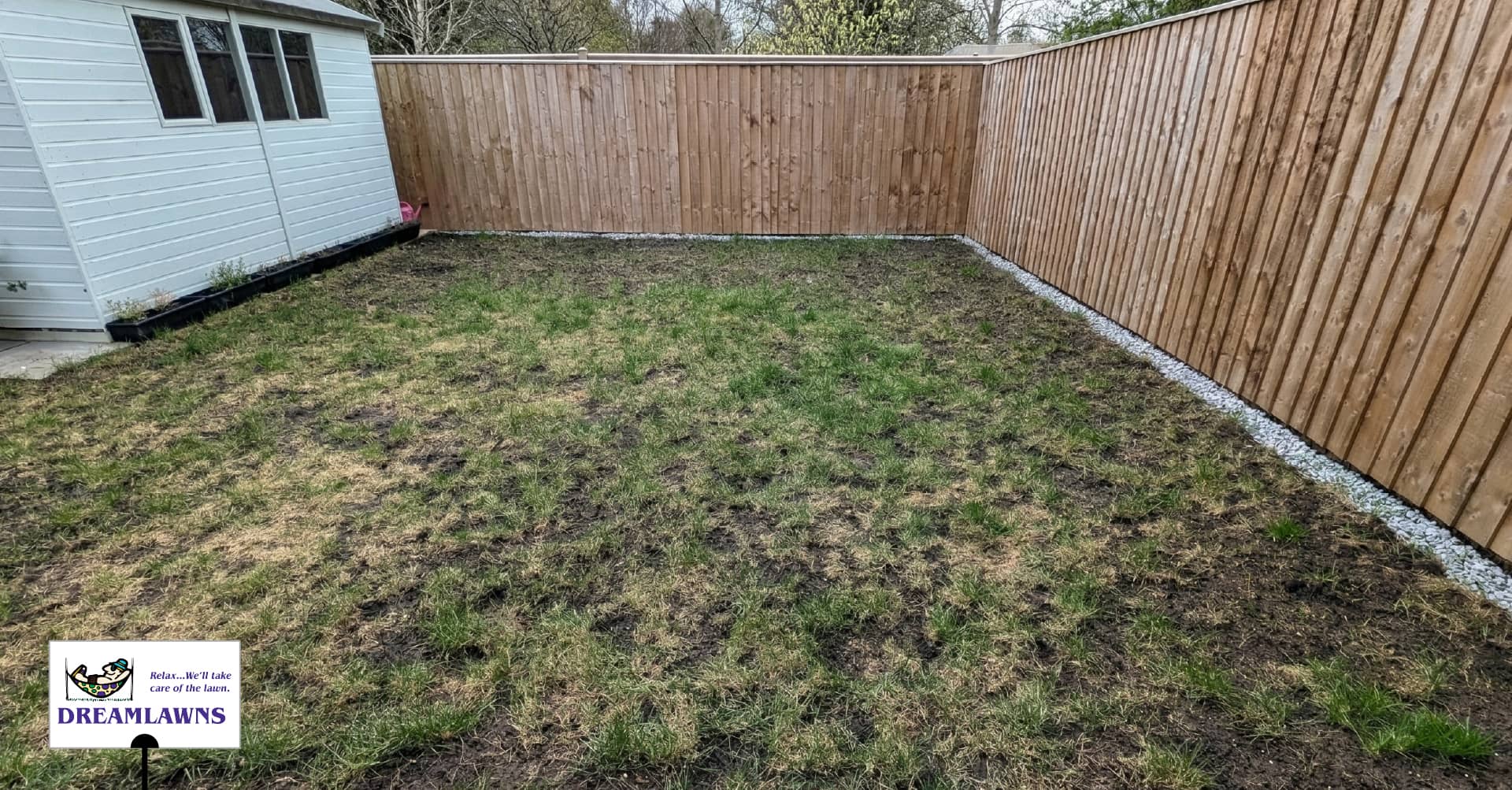
Dreamlawns Quick Cut: Patchy lawns after winter are usually caused by a combination of winter weeds dying off, soil compaction, fungal disease, and drought stress during the cold months. In Virginia Beach, the mild coastal climate means these issues often develop quietly beneath the surface. The good news is that most patchiness is correctable with the right diagnosis, proper aeration, overseeding timing, and a plan that addresses the root cause rather than just the symptom.
Every spring, Virginia Beach homeowners walk outside expecting their lawns to bounce back, and instead they find bare spots, thin areas, and uneven color that wasn’t there in the fall. It’s one of the most common lawn care concerns we hear, and it is understandably frustrating. You didn’t change anything. You didn’t do anything wrong. So why does your lawn look patchy after winter?
The honest answer is that winter does more to your lawn than most people realize. Even in a mild coastal climate like Virginia Beach, where temperatures rarely drop to extremes, the combination of cool temperatures, excess moisture, reduced sunlight, and slower turf growth creates the perfect environment for problems to quietly develop. By the time those problems become visible in spring, they’ve usually been building for weeks or months.
Understanding why your lawn looks patchy after winter is the first step toward fixing it correctly. Because not all patchiness is the same, and treating the wrong cause won’t get you the results you’re looking for.
Why Does My Lawn Look Patchy After Winter?
Patchy lawns after winter are rarely the result of one single thing. More often, they’re the outcome of several overlapping issues that compound each other over the colder months. In Virginia Beach, the most common causes include winter weed die-off, soil compaction, fungal disease, and moisture stress. Here’s how each one contributes to the uneven, thin appearance homeowners see every spring.
Winter Weed Die-Off Leaves Bare Spots Behind
One of the most overlooked causes of spring patchiness is winter weeds completing their life cycle. Weeds like chickweed, henbit, and annual bluegrass germinate in the fall, spread through winter, and then die off as temperatures rise in late spring. When they go, they take up space that turf hasn’t had a chance to fill back in.
The result looks like sudden patchiness, but it actually developed over months. Those bare areas where weeds once grew are now exposed soil, vulnerable to new weed invasion and slow to recover without intervention. If your patchy lawn follows the pattern of where weeds were visible in winter, this is likely a major contributing factor.
Soil Compaction Restricts Root Growth and Recovery
Virginia Beach soils often contain clay components that compact easily, especially when wet. Winter rainfall, combined with any foot traffic on saturated or dormant turf, compresses the soil and reduces the pore space roots need to grow. When spring arrives, compacted areas can’t absorb water or nutrients efficiently, so turf in those zones greens up later, grows thinner, and struggles to fill in.
Compacted soil is often the hidden reason a lawn looks patchy despite proper fertilization and watering. If you’ve treated the visible problem without addressing what’s happening below the surface, the patchiness tends to return the following year.
Fungal Disease Can Damage Turf Over Winter Without Being Obvious
Cool, damp winters create ideal conditions for fungal disease. Overwatering during the colder months is one of the most common mistakes we see in Virginia Beach, and excess moisture combined with reduced airflow allows diseases like brown patch and gray leaf spot to develop quietly while the lawn appears inactive. By spring, those affected areas fail to recover at the same rate as the rest of the lawn.
Fungal damage tends to show up as irregular, discolored patches rather than evenly distributed thinning. If your patchiness has an inconsistent pattern and the affected areas seem to have poor turf structure even after watering resumes, disease damage from the winter months may be the culprit.
Moisture Imbalance Stresses Roots When Turf Is Most Vulnerable
Both overwatering and underwatering during winter can contribute to spring patchiness. Excess moisture suffocates root systems and promotes disease. But irrigation systems left on through winter, even at reduced schedules, can saturate soil for extended periods when turf doesn’t need supplemental water at all. On the other end, extended dry spells without any rainfall can stress cool-season grasses like Tall Fescue that remain active through winter.
Either way, roots enter spring weakened and unable to support even recovery across the lawn, leading to that frustrating uneven green-up that makes some areas look healthy while others lag behind.
How Can You Tell What’s Actually Causing the Patchiness?
Before reaching for seed or fertilizer, it helps to read what your lawn is telling you. Different causes leave different clues, and treating the wrong problem delays real recovery.
- Thin, evenly distributed areas across the full lawn: likely compaction or overall root stress from winter moisture mismanagement
- Bare patches that follow where winter weeds were visible: weed die-off, leaving exposed soil behind
- Irregular, discolored patches with poor turf structure: possible fungal disease damage from winter moisture
- Areas near walkways, driveways, or high-traffic zones: compaction from winter foot traffic on dormant or wet turf
- Turf that lifts easily when pulled: shallow root systems caused by compacted soil or disease
When in doubt, a professional evaluation can remove the guesswork. At Dreamlawns, we assess turf condition, soil health, drainage patterns, and seasonal history before recommending any treatment plan. That approach matters because a patchy lawn after winter often has more than one contributing cause.
What Should You Actually Do About a Patchy Lawn After Winter?
The right response depends on what’s driving the patchiness, but there are a few foundational steps that support recovery regardless of the cause.
Core Aeration Addresses Compaction and Supports Recovery
If compaction is contributing to your patchy lawn after winter, core aeration is the most effective starting point. By removing small plugs of soil, aeration restores the pore space roots need to grow deeper and absorb nutrients more efficiently. It also improves drainage, which reduces the conditions that led to moisture-related problems in the first place.
For Fescue lawns in Virginia Beach, fall is the ideal time to aerate because it aligns with the grass’s active growth period. Spring aeration can be appropriate in some cases, but timing matters. Aerating at the wrong stage can stress turf that’s already trying to recover from winter.
Is Overseeding the Right Fix for a Patchy Lawn After Winter?
Overseeding is one of the most effective long-term solutions for restoring lawn density, but timing is critical. For Tall Fescue lawns in Virginia Beach, fall overseeding paired with aeration gives new seed the best chance of establishing before winter. Seeding in spring is generally not recommended for Fescue because the young grass won’t have time to develop a strong root system before summer heat arrives.
If your patchy lawn after winter is the result of thin turf and weed die-off, fall is the time to address it with seed. In the meantime, spring care should focus on supporting the existing turf, managing weeds, and building soil health so fall overseeding has the best possible conditions to work with.
Managing Weeds to Prevent Next Winter’s Patchiness
If winter weed die-off contributed to this year’s patchy lawn, the way to reduce that problem next year is through properly timed pre-emergent applications in fall. For warm-season lawns, pre-emergents applied in October through early November help prevent weeds like chickweed, henbit, and annual bluegrass from germinating in the first place. For Fescue lawns, targeted winter weed suppression during the cooler months helps keep those weeds from dominating while turf growth is slowed.
Keep in mind that post-emergent herbicides should be used carefully with newly seeded or stressed turf. If your lawn is already thin and recovering, aggressive weed treatments can add stress at the wrong time. A property-specific approach ensures treatments are timed to protect, not further strain, your turf.
Adjusting Your Watering Strategy Supports Faster Recovery
As spring temperatures rise and turf begins actively growing again, transitioning to a deep, infrequent watering strategy helps roots grow stronger and deeper. The goal is 1 to 1.5 inches of water per week, delivered in one or two sessions rather than daily light watering. Watering early in the morning, ideally before 9:00 a.m., reduces evaporation and minimizes the fungal disease risk that contributed to winter damage in the first place.
If you have an irrigation system, spring is also a good time to evaluate your zones and make sure coverage is even. Dry spots caused by irrigation gaps often show up as patchy areas that don’t respond to other treatments because the underlying issue is simply inconsistent moisture delivery.
What Should You Avoid When Your Lawn Looks Patchy After Winter?
Some common instincts actually slow recovery when applied to a patchy post-winter lawn.
- Don’t over-fertilize in early spring: Applying heavy nitrogen before turf is actively growing can stress the lawn and promote disease rather than recovery.
- Don’t seed Fescue in spring, expecting strong results: Spring-seeded Fescue rarely survives the Virginia Beach summer. Fall is the right window.
- Don’t water more frequently to compensate for thin areas: Frequent shallow watering promotes weak roots and fungal conditions. Deep, infrequent watering is always the better approach.
- Don’t apply fungicide to mushrooms: Mushrooms that appear in patchy areas are a sign of decomposing organic matter, not turf disease. Fungicides won’t address them and can disrupt soil biology.
How Does Dreamlawns Help You Recover From a Patchy Winter Lawn?
At Dreamlawns, a patchy lawn after winter isn’t treated as a single problem with a single solution. Because the causes vary from property to property, we start with a thorough evaluation that looks at turf type, soil health, drainage patterns, compaction levels, and the history of the lawn through the winter months. From there, we build a plan that addresses what’s actually happening, not what looks most obvious from the surface.
That plan typically includes a combination of spring preparation, targeted weed management, customized fertilization, and a clear roadmap for fall aeration and overseeding when the timing is right for Fescue lawns. We also help you dial in watering practices and mowing strategy so the turf you do have is as healthy as possible heading into summer.
Our goal isn’t just to get your lawn looking better by summer. It’s to break the cycle so that next winter doesn’t leave you starting over again. With proactive care, proper timing, and a year-round program built around your lawn’s specific needs, patchy post-winter lawns become less of an annual reality and more of a problem you solved.
Contact us today for a property assessment, and let’s build a plan that actually addresses what’s behind your patchy lawn after winter.
Frequently Asked Questions
Bare spots in spring are most often caused by winter weed die-off, soil compaction, fungal disease damage, or moisture stress during the colder months. In Virginia Beach, all four factors can contribute simultaneously. A property evaluation helps identify the specific cause so treatment targets the right problem.
Tall Fescue does not spread laterally, so bare patches won’t fill in naturally the way warm-season grasses might. Without overseeding and correcting the underlying cause, thin areas tend to stay thin or get taken over by weeds. Fall is the best time to overseed Fescue lawns in Virginia Beach.
For Tall Fescue lawns, spring seeding is generally not recommended. Seeds germinate but rarely develop a root system strong enough to survive a Virginia Beach summer. Fall overseeding, paired with aeration, gives new grass the best chance of establishing and thriving long-term.
Light fertilization timed to when turf is actively growing can support recovery, but applying heavy nitrogen too early often stresses the lawn rather than helping it. Fertilization should align with your turf type and what the lawn is actually doing, not just the calendar date.
Lawn Care Services In The Virginia Beach Area
Dreamlawns provides superior lawn care service to Virginia Beach & Chesapeake VA residents.

