


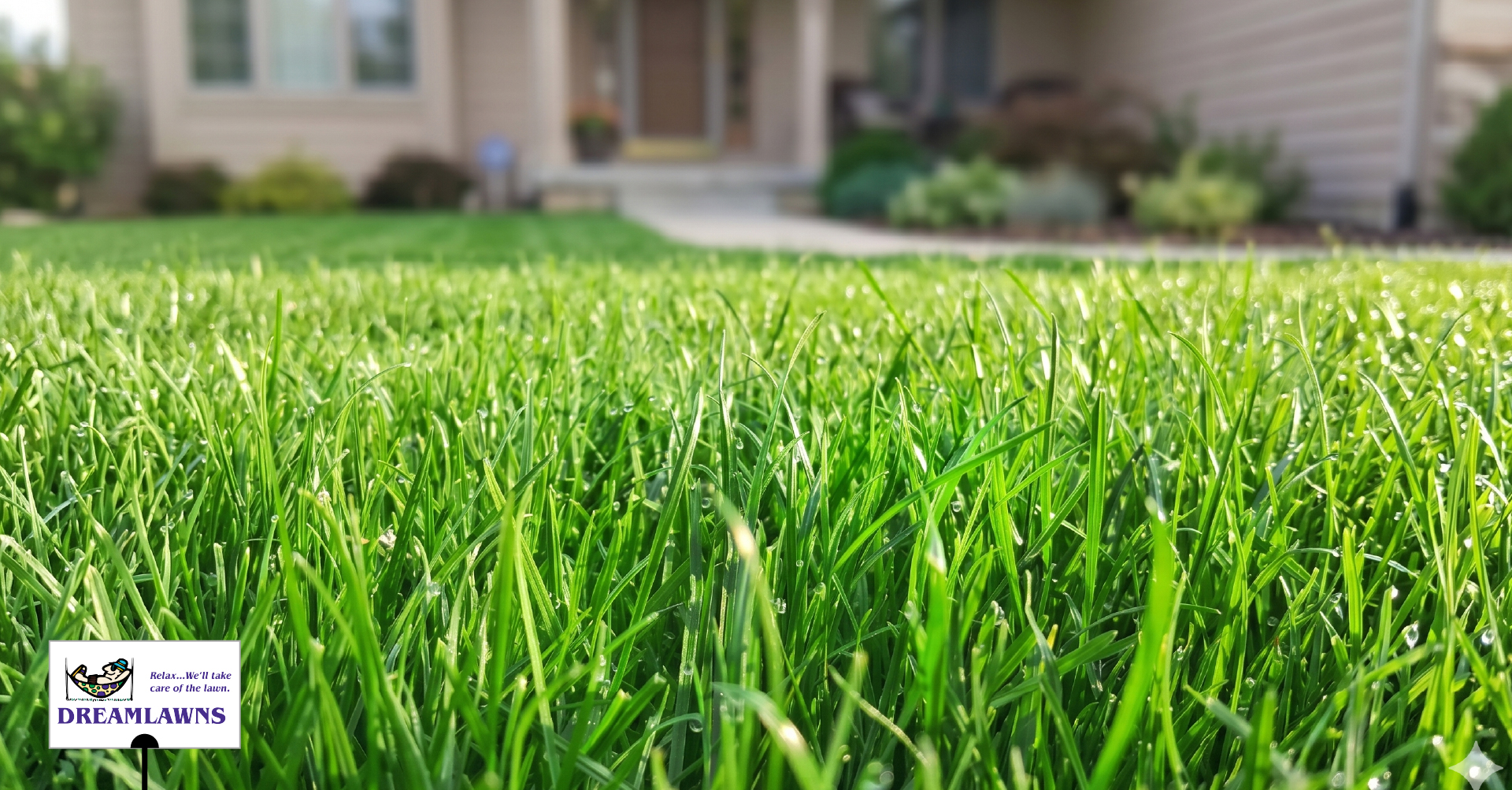
Dreamlawns Quick Cut: Tall Fescue is the dominant cool-season grass in Virginia Beach, and like Tall Fescue anywhere it’s grown, it doesn’t spread to fill bare spots and needs annual overseeding to stay thick. What sets Virginia Beach apart is the heat. Hampton Roads pushes Fescue closer to its stress limits than cooler parts of its range, which means summer survival and fall recovery take on added importance here. This guide covers everything Fescue homeowners in Virginia Beach need to know: what it is, how it grows, and how to manage it through every season.
Tall Fescue is the most common lawn grass in Virginia Beach for good reason. It handles mild coastal winters, tolerates moderate heat better than most cool-season grasses, and stays green year-round under normal conditions. If you have a lawn in the Hampton Roads area, there’s a strong chance it’s Fescue.
But Fescue also has real limitations that catch a lot of homeowners off guard. It doesn’t spread to fill in bare spots the way warm-season grasses do. It can thin dramatically during a tough Virginia Beach summer. And managing it well here requires a seasonal approach that’s built around this specific coastal climate, not the generic lawn care advice you’ll find on the back of a seed bag.
This guide covers everything you need to know about Tall Fescue in Virginia Beach: how it grows, what it needs by season, and where most homeowners go wrong. Whether you’re starting from scratch or trying to improve a struggling lawn, consider this your permanent reference.
What Is Tall Fescue and Why Is It So Common in Virginia Beach?
Tall Fescue is a cool-season, bunch-type grass that thrives in temperate climates where neither extreme heat nor severe cold dominates the calendar. Virginia Beach sits in what turf specialists call a “transition zone”, the band of the country where cool-season and warm-season grasses both struggle in different ways. Tall Fescue handles this zone better than almost any other grass.
A few things make it particularly well-suited to this area. It has a deeper root system than most cool-season grasses, which improves drought tolerance during dry summer stretches. It adapts reasonably well to the mix of sandy and clay-heavy coastal soils common in Hampton Roads. And unlike warm-season grasses such as Bermuda, Zoysia, St. Augustine, and Centipede, which go dormant once temperatures drop, Tall Fescue stays active through Virginia Beach’s mild winters.
The most important thing to understand about Tall Fescue is that it’s a bunch-type grass. It grows in clumps and does not spread via stolons or rhizomes the way Bermuda or Zoysia does. That single characteristic shapes everything else about how you manage it. Bare spots don’t fill in naturally. Thinning doesn’t self-correct. The lawn you have at the end of summer is largely the lawn you’ll carry into fall unless you actively overseed it.
What Are the Biggest Challenges of Growing Tall Fescue in Virginia Beach?
Understanding Fescue’s limitations in this climate is just as important as understanding its strengths. These are the challenges that separate well-managed Fescue from the thin, patchy lawns that many Virginia Beach homeowners have come to accept as normal.
- Summer heat and humidity: Virginia Beach summers are hot, humid, and unforgiving on cool-season grasses. Fescue doesn’t go dormant in summer the way warm-season grasses do. What looks like dormancy is often actual dieback, meaning those thin patches won’t recover on their own.
- Disease pressure: The combination of heat, humidity, and frequent summer rainfall creates ideal conditions for fungal diseases like brown patch, gray leaf spot, and Pythium blight. Fescue is more vulnerable to these than warm-season alternatives, particularly during July and August.
- No lateral spread: As noted above, Fescue doesn’t spread. Every bare or thin area in a Fescue lawn requires deliberate intervention, either through overseeding or sod, to recover.
- Poa annua contamination: Annual bluegrass (Poa annua) is one of the most persistent weed problems in Fescue lawns in this area. It looks similar to Fescue from a distance, germinates in fall, and produces unsightly seed heads in spring. Once established, it’s extremely difficult to remove without damaging the surrounding Fescue.
- Compaction: Virginia Beach soils, particularly those with clay content, are prone to compaction that restricts root growth, reduces water infiltration, and weakens turf over time. Without annual aeration, Fescue lawns in this area gradually decline.
What Is the Right Mowing Height for Tall Fescue?
Mowing height is one of the most impactful things you control as a homeowner, and it’s one of the most commonly mismanaged. Most people mow too short, too often, and with a dull blade. For Tall Fescue in Virginia Beach, the target is simple: mow at 4 inches, year-round.
Why 4 Inches?
Taller grass shades the soil, which reduces surface temperature, retains moisture longer, and makes it harder for weed seeds to germinate. For Fescue specifically, keeping the blade length higher means more leaf surface for photosynthesis, which supports deeper root development. A well-mowed Fescue lawn at 4 inches is more drought-tolerant, more disease-resistant, and more competitive against weeds than one kept at 2.5 or 3 inches.
The One-Third Rule
Never remove more than one-third of the blade height in a single mow. If your lawn has grown to 6 inches and you cut it to 4, that’s fine. If it’s at 5 inches and you cut it to 2.5, you’ve scalped it. The one-third rule exists because removing too much blade at once stresses the plant, depletes stored carbohydrates, and leaves it vulnerable to disease and heat. If the lawn has gotten ahead of you, bring it down gradually over two or three mows rather than all at once.
Mowing Frequency and Timing
Mow based on growth rate, not a fixed schedule. In spring and fall when Fescue is actively growing, that might mean mowing every five to seven days. In summer, growth slows and mowing frequency can drop accordingly. In winter, mow only when the grass needs it. The goal is always to stay within the one-third rule, not to stick to a calendar.
Blade Sharpness Matters
A dull mower blade tears grass rather than cutting it cleanly. Torn blades are more vulnerable to disease entry, take longer to recover, and give the lawn a brownish, frayed appearance after mowing. Sharpen your blade at least once per season, or more frequently if you’re mowing regularly.
What Not to Do
- Don’t mow below 3.5 inches at any point during the year, with one exception: mow short and bag clippings right before fall aeration and seeding to improve seed-to-soil contact.
- Don’t scalp the lawn in early spring as a “cleanup” cut
- Don’t mow when the lawn is wet or the soil is saturated, as this causes compaction and uneven cuts
- Don’t bag clippings unless they’re clumping. Mulched clippings return nitrogen and organic matter to the soil
How Should You Water a Tall Fescue Lawn in Virginia Beach?
Watering is where well-intentioned homeowners cause some of the most damage to Fescue lawns. Too much, too often, at the wrong time of day, and the result is shallow roots, fungal disease, and a lawn that’s dependent on irrigation to survive. The right approach is deep and infrequent watering that encourages roots to grow downward rather than staying near the surface.
The Basic Framework
- Target 1 to 1.5 inches of water per week, including rainfall
- Deliver that water in one or two deep sessions rather than daily light watering
- Water early in the morning, ideally between 5 a.m. and 9 a.m., to minimize evaporation and reduce fungal disease risk
- Allow the soil to partially dry between watering sessions. Consistently soggy soil suffocates roots and creates conditions for Pythium blight and other moisture-driven diseases
Seasonal Adjustments
Watering needs change significantly across the year. In spring and fall, Virginia Beach rainfall often handles most of the moisture requirement, and supplemental irrigation should be minimal. In summer, heat and evaporation rates increase demand. During extended dry spells in July and August, you may need to water more frequently to prevent drought stress, but continue to prioritize deep sessions over shallow daily watering.
In winter, turn your irrigation system off or scale back significantly. Winter rainfall in Virginia Beach typically provides more than enough moisture for Fescue, and overwatering during cooler months is one of the leading causes of fungal disease and root stress heading into spring.
Signs Your Watering Needs Adjusting
- Footprinting (footprints remain visible after walking): the lawn is drought-stressed and needs water
- Blue-gray or purplish tint to the turf: early drought stress signal
- Curling or needle-like blades: the grass is conserving moisture
- Soggy areas that stay wet between sessions: reduce frequency or check irrigation coverage
- Mushrooms or moss appearing in low areas: excess moisture and poor drainage, often linked to compaction
What Does a Fescue Fertilization Schedule Look Like in Virginia Beach?
Fertilization for Tall Fescue in Virginia Beach is built around the grass’s natural growth cycle. Fescue grows most actively in fall and spring. Summer is a stress period, not a growth period. A good fertilization program reflects that reality rather than working against it.
Fall: The Primary Fertilization Window
September through November is the most important fertilization period for Fescue. As temperatures cool and growth resumes after the summer stress period, the lawn is actively building root mass and storing carbohydrates for winter. Nitrogen applied during this window supports that process rather than forcing the kind of weak top growth that summer applications create.
A well-timed fall fertilization program typically involves two to three applications spaced four to six weeks apart, starting in early to mid-September and finishing before consistent frost arrives. The goal is to strengthen roots and improve turf density heading into winter, not to push aggressive blade growth.
Spring: A Supporting Application
A light fertilizer application in spring, once the turf is actively growing and soil temperatures have risen above 50°F, supports the lawn’s transition into the growing season. This is not the time for heavy nitrogen. Applying too much too early pushes soft top growth before the root system can support it, increases disease susceptibility, and can result in nutrient leaching through still-saturated winter soils.
Summer: Hold Off
Avoid applying nitrogen to Fescue during the summer months, especially fast-release nitrogen sources. High nitrogen in summer promotes lush top growth that the plant can’t sustain in heat and humidity, increases disease pressure, and can burn already-stressed turf. That said, Fescue still benefits from summer applications of calcium, potassium, and micronutrients, which support root strength, stress tolerance, and overall plant health during the most demanding part of the year. Fescue needs the right kind of management in summer, not nitrogen-driven stimulation.
Soil Testing
A soil test every two to three years removes the guesswork from fertilization. Virginia Beach soils vary considerably in pH, organic matter, and nutrient availability. Without knowing what your soil actually needs, fertilization becomes an educated guess at best. Soil tests from a reputable lab tell you exactly what to apply, what to hold back, and whether lime or sulfur applications are needed to correct pH.
Why Does Tall Fescue Need Annual Aeration and Overseeding?
This is probably the most important section of this guide for Virginia Beach homeowners. Tall Fescue requires annual aeration and overseeding not because something has gone wrong, but because of how the grass grows and what the Virginia Beach climate does to it every summer. Understanding this prevents a lot of frustration.
Why Fescue Thins Over Time
Because Fescue is a bunch-type grass, it has no mechanism for filling in bare or thin areas on its own. Every blade of grass you see came from a seed. When summer heat, disease, drought, or heavy foot traffic kills individual plants, those spaces stay empty until seed is introduced. In a warm-season lawn, the surrounding grass eventually creeps in to cover those spots. In a Fescue lawn, they stay bare until you do something about it.
Even without significant stress events, a Fescue lawn loses some density every summer. Heat, humidity, and reduced growth rates mean that by September, most Virginia Beach Fescue lawns are noticeably thinner than they were in May. Annual overseeding is the standard response to that, not an optional upgrade.
The Role of Aeration
Core aeration removes small plugs of soil from the lawn, relieving compaction and restoring the pore space that roots need to grow. In Virginia Beach’s clay-heavy coastal soils, compaction builds up quickly, especially in high-traffic areas. Aerating before overseeding creates ideal conditions for new seed to make soil contact, germinate, and establish before winter arrives.
Without aeration, overseeding becomes significantly less effective. Seed that falls on compacted, thatch-covered soil has poor contact with the soil, lower germination rates, and shallower root development. Pairing the two treatments gives new grass the best possible start.
When to Aerate and Overseed
The window for aeration and overseeding in Virginia Beach is mid-September through mid-October. This timing aligns with cooling soil temperatures that favor Fescue germination, gives new seedlings several weeks to establish before the first frost, and avoids the spring window when pre-emergent herbicides and summer heat would undermine germination.
Seeding outside this window, particularly in spring, is generally not recommended for Fescue. Spring-seeded Fescue germinates but rarely develops a root system strong enough to survive a Virginia Beach summer. Fall is the right window, and it should be planned for rather than reactive.
Seed Quality
Not all Fescue seed is equal. Low-quality seed blends often contain contaminating grasses like Poa annua and Poa trivialis that look similar to Fescue but perform poorly and are nearly impossible to remove selectively once established. At Dreamlawns, we use only certified Fescue blends tested to be free of these contaminants, which keeps the lawn performing as expected.
For a full walkthrough of what happens after your lawn is aerated and seeded, including watering schedules and mowing guidance for the first several weeks, see our guide on what to expect after aeration and seeding.
What Weeds Are Most Problematic in Tall Fescue Lawns?
Weed management in Fescue lawns is more complicated than in warm-season lawns because the herbicide options are more limited. Many post-emergent products that work well in dormant Bermuda or Zoysia can damage active Fescue. This makes timing and prevention even more important.
Winter Annual Weeds
Virginia Beach Fescue lawns face weed pressure year-round, but winter weeds often get the most attention because they stand out against slow-growing turf. Common winter weeds include chickweed (which has both annual and perennial species), henbit, and annual bluegrass (Poa annua). By the time they’re visible, they’re already well established, and they compete with Fescue for nutrients and space through the cooler months. When they die off in late spring, they leave behind bare or thin areas that invite summer weeds to take over.
One of the biggest mistakes homeowners make with winter weeds is skipping winter mowing. When winter weeds reach mature height and go to seed, they stop moving fluids through their vascular system, which makes herbicide applications significantly less effective. Regular winter mowing keeps these weeds shorter, younger, and more responsive to treatment, and it also prevents them from producing the seed that fuels next year’s infestation. Summer weeds like crabgrass, spurge, and nutsedge bring their own pressure during the warm months, which is why year-round management matters more than focusing on any single season.
Pre-emergent herbicides applied in the fall are the most effective tool against winter annuals in warm-season lawns, but Fescue lawns are managed differently. Because fall is prime overseeding season and pre-emergents prevent all seed germination (including Fescue), Dreamlawns doesn’t apply fall pre-emergents to Fescue lawns. Instead, winter weeds in Fescue are controlled with post-emergent herbicides: spot treatments during fall rounds and blanket applications in late winter and early spring as weeds become active and growing conditions allow effective control.
The Poa Annua Problem
Annual bluegrass deserves special mention because it’s particularly problematic in Fescue. It germinates in fall alongside Fescue, looks similar enough that homeowners often don’t notice it until spring when its lighter color and seed heads become obvious. There is currently no selective herbicide that removes Poa annua from Fescue without damaging the surrounding grass. The best approach is prevention through properly timed pre-emergents, high-quality seed free of contamination, and dense turf that limits the open space Poa needs to establish. For a deeper look at this issue, see our post on the Poa problem in Fescue lawns.
Summer Weeds
As Fescue thins in summer, opportunistic summer weeds move into the open space. Crabgrass, spurge, and nutsedge are the most common. Pre-emergent applied in early spring, timed to soil temperature rather than calendar date, is the primary defense against crabgrass. Dense, healthy Fescue is the best defense against everything else. A thin lawn is an open invitation.
What Diseases Threaten Tall Fescue in Virginia Beach?
Virginia Beach’s summer climate, hot, humid, and frequently wet, creates near-ideal conditions for fungal disease in Fescue. Disease is one of the leading causes of summer thinning, and it’s often misdiagnosed as drought stress. Knowing the difference matters because the wrong response can make the problem significantly worse. For a full breakdown of how to distinguish disease from drought and insect damage, see our guide on why your lawn is turning brown.
Brown Patch
Brown patch is the most common and damaging summer disease for Fescue in Virginia Beach. It’s caused by the fungus Rhizoctonia solani and thrives when nighttime temperatures stay above 70°F and the turf stays wet overnight. Look for circular or irregular tan patches with a darker smoke ring border at the margins. Overwatering in the evening is one of the primary triggers. Once active, it spreads rapidly and requires fungicide treatment to stop.
Gray Leaf Spot
Gray leaf spot is especially damaging to newly seeded Fescue, making it a particular concern in the weeks following fall overseeding. It appears as small tan spots with brown or gray centers on individual blades, causing them to wither and die. Warm, wet conditions in late summer and early fall favor its development. Preventive fungicide applications are the most effective response, particularly on lawns that have had gray leaf spot in previous years.
Pythium Blight
Pythium blight is fast-moving and can destroy large sections of turf within 24 to 48 hours under the right conditions: temperatures above 85°F, high humidity, and saturated soil. It appears as greasy, water-soaked patches that quickly collapse into a matted, reddish-brown mess. Proper drainage, morning watering, and avoiding overwatering are the primary preventive measures. Active outbreaks require immediate fungicide treatment.
Dollar Spot
Dollar spot tends to appear in spring and fall when temperatures are moderate and the lawn is either underfertilized or stressed. It causes small, straw-colored patches roughly the size of a silver dollar that can merge into larger irregular areas if untreated. It’s less dramatic than brown patch but persistent, and it responds well to proper fertilization and targeted fungicide treatment.
Prevention Over Reaction
The most effective approach to disease in Fescue lawns is preventive rather than reactive. By the time disease symptoms are visible, the fungus has already been active for days. A seasonal disease management program that includes scheduled fungicide applications during high-risk windows, combined with proper mowing, watering, and fertilization practices, dramatically reduces the likelihood of a serious outbreak.
What Does a Full-Year Fescue Care Calendar Look Like for Virginia Beach?
Managing Fescue well in Virginia Beach requires a seasonal mindset. Here’s a concise breakdown of what the lawn needs, and what it doesn’t need, across the year.
January and February: Minimal Care, Maximum Awareness
- Continue mowing as needed at 4 inches. Winter mowing removes winter damage, stimulates growth, and improves herbicide effectiveness on winter weeds
- Avoid foot traffic on wet or frozen turf to prevent compaction damage
- Monitor moisture levels and make sure irrigation is off or scaled back significantly
- Clear leaves and debris that block sunlight and trap moisture against the grass crowns
- Begin planning fall treatments: aeration, overseeding, and fertilization schedules
March and April: Measured Action
- Wait for soil temperatures above 50°F before applying fertilizer or pre-emergent
- Apply spring pre-emergent for crabgrass prevention when soil temps reach 55°F at 2-inch depth
- Light spring fertilizer application once turf is actively and consistently growing
- Maintain 4-inch mowing height as growth accelerates
May and June: Growth Management
- Maintain 4-inch mowing height throughout
- Transition to deep, infrequent watering as temperatures rise
- Watch for early signs of brown patch as nighttime temps climb above 70°F
- No fertilization after late spring
July and August: Stress Management
- Mow high, mow sharp, and mow only when needed
- Water deeply in the early morning. Increase frequency slightly during extended dry spells but never switch to daily shallow watering
- Monitor for disease closely, look for circular patches, leaf lesions, and smoke ring borders
- Avoid all fertilization
- Expect some summer thinning. Document thin areas to guide fall overseeding
September and October: The Most Important Window
- Aerate and overseed between mid-September and mid-October
- Begin fall fertilization program in early September
- Water newly seeded areas lightly and frequently until germination, then transition to deep watering
- Hold off on post-emergent weed treatments until new seedlings are established
- Continue mowing at 4 inches once seedlings reach mowing height
November and December: Preparation and Protection
- Complete fall fertilization program before consistent frost
- Final mow of the season at 4 inches, do not scalp
- Turn off or significantly reduce irrigation
- Clear leaves regularly. Debris left on the lawn through winter smothers turf and promotes disease
How Does Dreamlawns Manage Tall Fescue Differently?
Everything described in this guide requires timing. And timing is where most homeowners, working from a calendar or acting on a hunch, fall short. At Dreamlawns, every treatment we apply to a Fescue lawn is tied to actual conditions rather than fixed dates.
Pre-emergent goes down when soil temperatures indicate weed seeds are about to germinate, not on a predetermined March date. Fertilization is matched to the turf’s growth cycle and held back during the summer stress period when it would do more harm than good. Fungicide programs are adjusted based on weather patterns, disease history, and what we’re seeing on the property. Aeration and overseeding are scheduled to align with the fall window that gives new seed the best chance of establishing before winter.
We also use only certified Fescue seed blends that have been tested and verified free of weedy grasses like Poa annua and Poa trivialis. For more background on how we approach Fescue care and what homeowners can expect as new customers, visit our Tall Fescue customer guide.
If your Fescue lawn isn’t performing the way you’d expect, the answer usually isn’t a different product. It’s better timing, better soil health, and a program built around what this specific climate demands from this specific grass. Contact us today to schedule a property assessment and let’s build a plan around your lawn.
Frequently Asked Questions
No. Unlike warm-season grasses, Tall Fescue does not go dormant in summer. What looks like dormancy in a Virginia Beach Fescue lawn during July and August is often actual heat stress or dieback. Those thin and bare areas won’t recover on their own the way a dormant warm-season lawn will in fall. They require overseeding to restore density.
Annually. Because Fescue doesn’t spread and Virginia Beach summers reliably thin it out, overseeding every fall is considered standard maintenance for Fescue lawns in this area, not an optional extra. The mid-September to mid-October window gives new seed the best chance of establishing before winter.
Summer thinning is normal for Tall Fescue in Virginia Beach and is caused by a combination of heat stress, disease pressure, and the grass’s inability to spread and self-repair. A lawn that was dense in spring will almost always be thinner by September. That’s what fall overseeding is designed to address. If the thinning is severe or happens in the same spots every year, underlying issues like soil compaction, drainage problems, or recurring disease may be contributing.
It’s not recommended for Virginia Beach. Spring-seeded Fescue can germinate, but the seedlings rarely develop a root system strong enough to survive the summer heat before their first growing season ends. Fall overseeding, ideally paired with core aeration in mid-September to mid-October, gives new grass the time it needs to establish properly and carry through to the following spring.
Lawn Care Services In The Virginia Beach Area
Dreamlawns provides superior lawn care service to Virginia Beach & Chesapeake VA residents.

